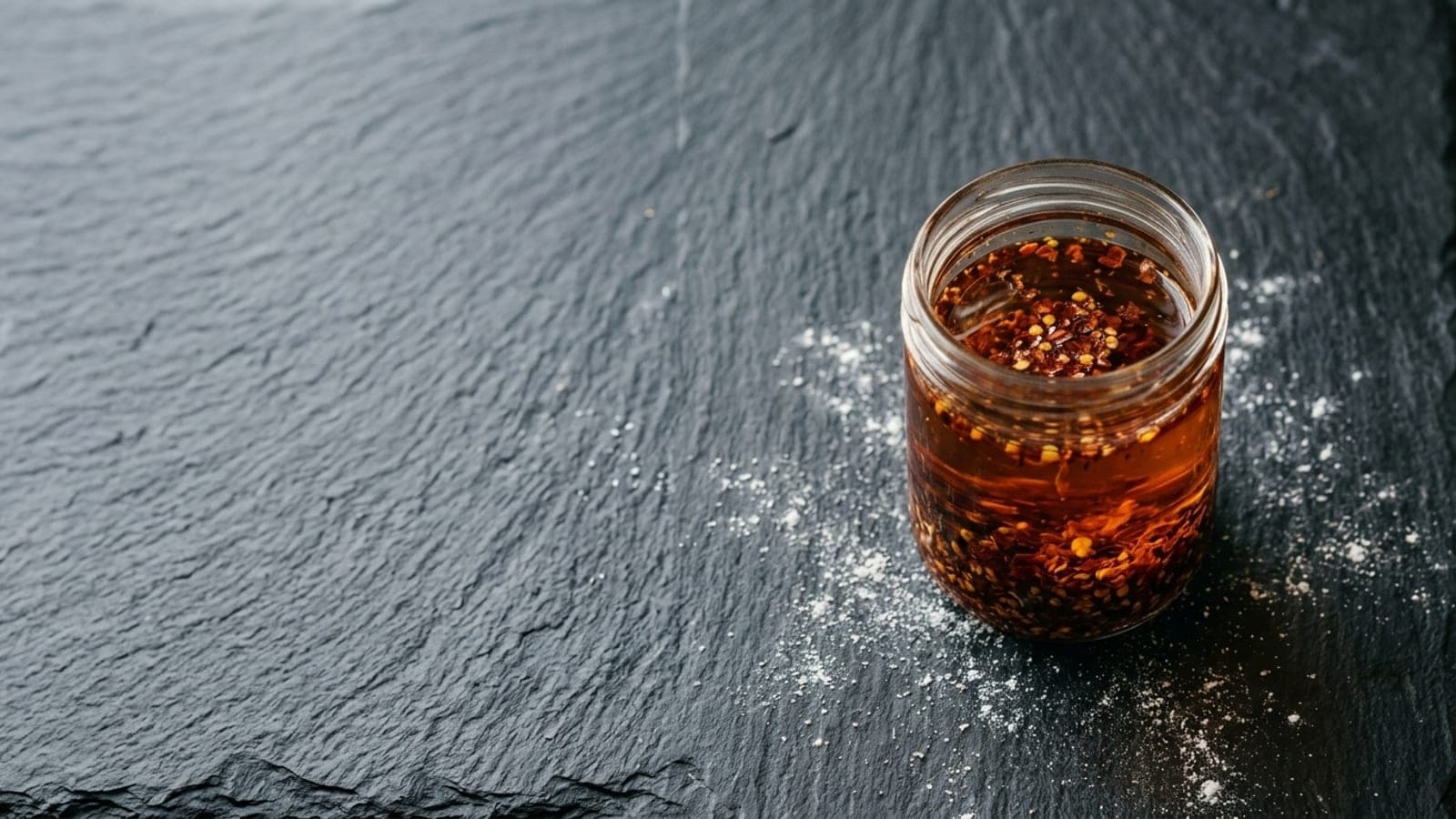
Chili oil for pizza — the recipe
The best chili oil for pizza isn't a brand — it's the bottle on every pizzeria table in Italy: olio piccante, good olive oil that a handful of dried chilies has been gossiping with. Ten minutes of nearly no work buys a finishing drizzle that outlives a whole season of diavolas — fresher, cheaper and hotter-to-taste than anything jarred.
Two ingredients, weighed below. It goes on after the bake — oven heat would blunt it, and the whole point of a chilli oil for pizza is the fresh, fruity burn drizzled over the top.
What goes in
One batch — makes about 110 g:
crushed Calabrian if you can find them; seeds in
Scaling up is linear — double everything for a double batch.
Where it goes
The classics that use it, with the dose each one takes at its default size — the same numbers their recipe pages scale to your dough:
| Pizza | Per pizza | Batch covers |
|---|---|---|
| Diavola | 5 g | × 22 |
How it’s done
- Warm the oil in a small pan over low heat until it shimmers — well short of smoking.
- Take it off the heat and stir in the chili flakes; they should fizz gently, not fry.
- Let it steep as it cools, then jar it, flakes and all. It sharpens overnight.
Keeps a month in a cool, dark cupboard — longer in the fridge, where it will cloud and then clear again at room temperature.
Questions from the counter
Can I use fresh chilies instead?
Better not, for a keeper: fresh chilies carry water, and water in oil is a short shelf life with safety questions attached. Dried flakes are the tradition — all the fire, none of the hurry.
How hot will it be?
As hot as your flakes. Calabrian peperoncino lands moderately hot and fruity; bird's-eye is open warfare. Start at the ratio above and tune the next batch — it's ten minutes, you can afford the science.
What's the best chili oil for pizza?
The best one is fresh and simple: a good fruity extra-virgin olive oil steeped with dried Calabrian peperoncino, made the week you need it — which is all a pizzeria's olio piccante ever is. If you'd rather buy a jar, look for one that's mostly olive oil and whole dried chili, not a thick paste and not loaded with sugar or aromatics. But a homemade batch costs pennies, tastes brighter, and lets you set the heat yourself, which is why the recipe above beats the shelf.
Is "chilli oil" the same as chili oil — and what about chilli crisp?
Same thing, different spelling: "chilli" is the British and Australian form, "chili" the American, and you'll see "chile" too — all of them mean oil infused with dried chillies. The one to keep separate is Chinese chilli crisp, a different animal packed with fried garlic, shallots and crunchy bits. Wonderful on plenty of things, but for pizza you want the clean Italian olio piccante here — just oil and chili, so it drizzles instead of clumps.
Put it on a pizza
The dough is the calculator’s job and the toppings are weighed on the recipe pages — this batch is ready for the classic below.
The clock is a suggestion. The dough is the boss. In bocca al lupo!