Cold proof pizza dough calculator
Cold fermentation is the easiest upgrade in pizza: mix today, bake in a day or three, collect the flavor. The only catch is the yeast dose — fridge hours don’t count like counter hours, and guessing is how dough ends up flat or blown. Set your plan below and weigh what the math says.
The plan
- Mix, knead, bulk 2 h at 21 °C.
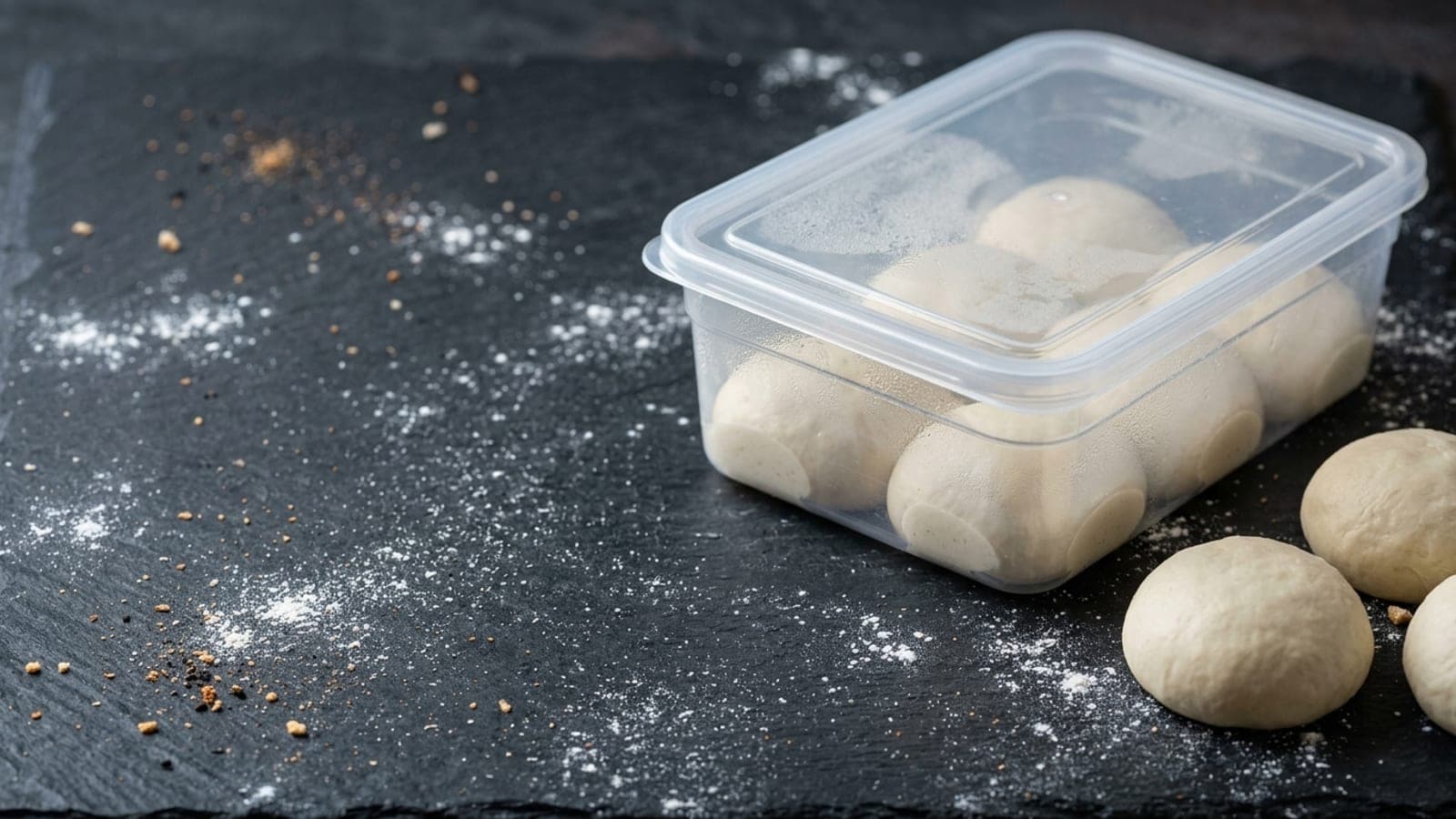
- Ball up, then into the fridge — covered, so it doesn’t crust.
- Out about 2 h before you bake; the wake-up is part of the 22 h window.
For the full weighed recipe and a clock-time schedule built around this plan, the calculator takes it from here.
What the fridge does to the clock
The model converts every stage of your plan into effective hours — fermentation roughly doubling in speed every 7 °C. At a typical 4 °C, one fridge hour is worth about 12 minutes of room-temperature work, so a full 24-hour fridge day adds only ~4.9 effective hours. That’s why the classic “24 hours” plan (24 hours (2 h + 22 h)) is worth just 6.7 effective hours, and why the dough still needs a real pinch of yeast rather than a homeopathic one.
The flavor case for those slow hours — and what actually happens in the dough — is the cold fermentation guide’s territory. This page is the arithmetic.
The doses, ready to weigh
The classic plans — about 2 h on the counter at 21 °C, the rest in a 4 °C fridge — weighed per 500 g of flour:
| The plan | IDY | ADY | Fresh |
|---|---|---|---|
| Overnight (2 h + 16 h) | 1.82 g | 2.19 g | 5.5 g |
| 24 hours (2 h + 22 h) | 1.49 g | 1.79 g | 4.5 g |
| 48 hours (2 h + 46 h) | 0.86 g | 1.03 g | 2.6 g |
| 72 hours (2 h + 70 h) | 0.60 g | 0.72 g | 1.8 g |
Sourdough follows the same clock with much bigger numbers; the sourdough calculator doses the starter and rebalances its flour and water. All of it comes from the calculator’s fermentation model, so the planner and the full recipe always agree.
The two-fridges problem
No two fridges agree. At 7 °C the model ferments about 35% faster than at 4 °C — enough to turn a planned 72-hour dough into a Saturday-morning overproof. If your dough keeps running ahead of schedule, your fridge is warmer than it claims: a cheap fridge thermometer settles the argument, and the planner’s fridge-temperature slider shows exactly what the difference costs in yeast.
Questions from the counter
Ball before the fridge or after?
Before — bulk on the counter, ball up, then refrigerate. Cold dough is stiff, sticky and miserable to shape, and balling warm dough is how the calculator’s own schedule choreographs it. Covered containers, or the fridge air will crust the skins.
Can I bake straight from the fridge?
Better not. Take the balls out about 2 hours before baking — cold dough fights the stretch, tears at the thin spots and blisters in the oven. The planner counts that wake-up as part of the fridge window, exactly like the calculator’s timeline does.
How long can dough stay in the fridge?
Two to three days is the sweet spot; flavor builds and the gluten holds. Past day four most doughs turn gray-spotted, slack and boozy — the enzymes win in the end. If you need a longer runway than that, freeze the balls after day one instead.
Why is the dose so small?
Because time is doing the work. A long ferment needs only enough yeast to finish on schedule — more would race past ready while you sleep. If the weight feels unweighably small, fresh yeast runs 3× the instant-dry number, or split the difference with a shorter plan.
From dose to dough
This planner answers the fridge question. The full calculator turns the same plan into a complete weighed recipe — ten styles, hydration, salt, pan sizes — and a clock-time schedule from mix to bake.
The clock is a suggestion. The dough is the boss. In bocca al lupo!