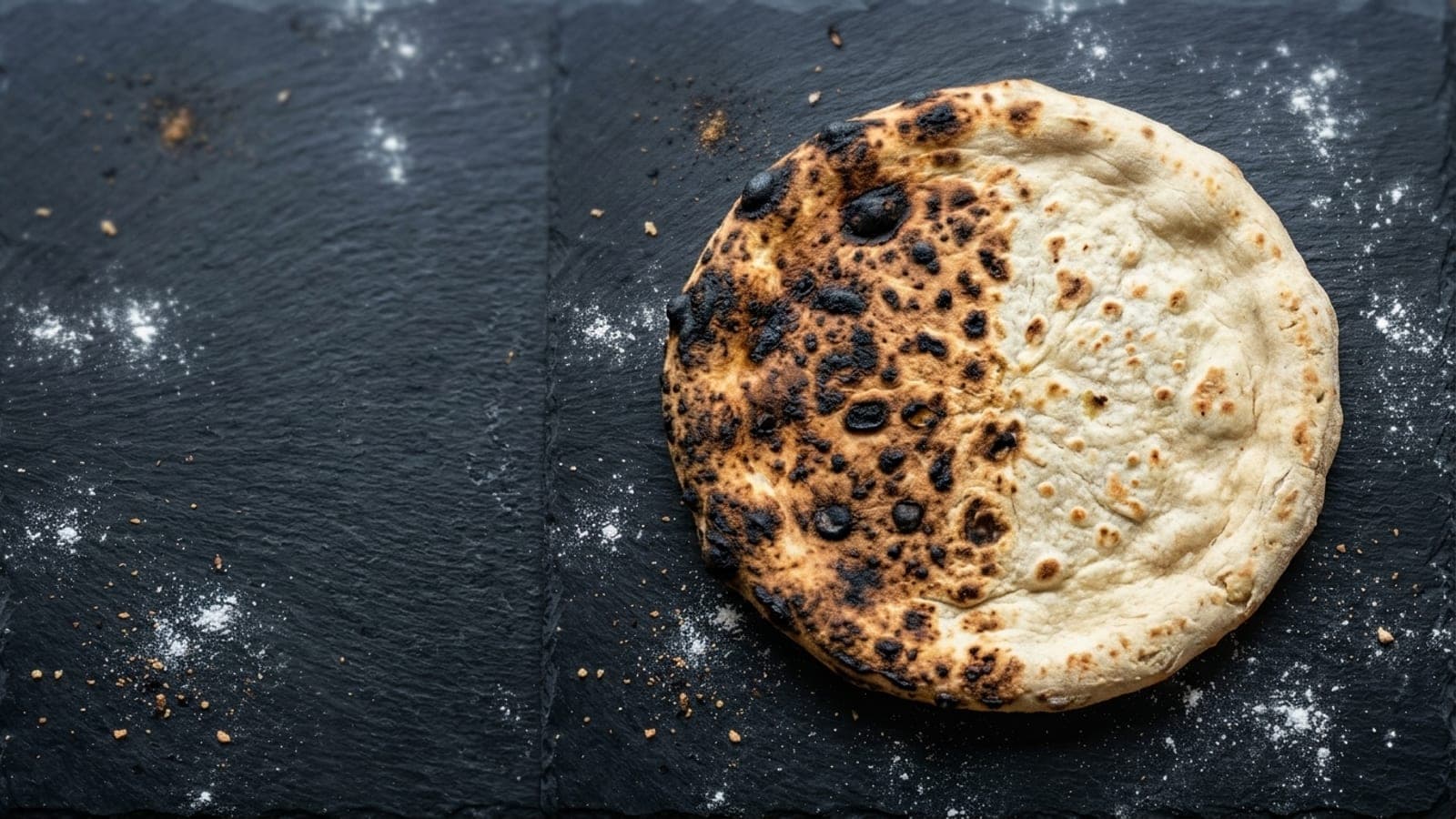
Burnt or pale pizza bottom — the fix
The top can look perfect while the underside tells the truth. A base that scorches and one that flops are the same problem from opposite ends — the surface the pizza bakes on, and how hot it really is when the dough lands.
No steel, stone or hot surface
How to tell — The top is colored and done but the underside is pale, soft and folds like bread — it baked on air, not on contact.
Fix it now — Slide the pizza off its tray and finish it directly on the lowest shelf or a preheated tray for a few minutes, watching the top.
Next time — Bake rounds on a baking steel or stone. The base bakes by contact, and a saturated slab is the single biggest home-oven upgrade. the oven & baking guide goes deeper.
The preheat was cut short
How to tell — The oven said ready, but the first pizza came out pale underneath while later ones browned fine — the slab was still cold inside.
Fix it now — Give the surface more time at full blast before the next launch; the thermostat reports the air, and the air heats long before the stone does.
Next time — Preheat the steel or stone until it's truly saturated, and let it recover between pizzas — the oven guide has the honest timings. the oven guide goes deeper.
Scorching from below
How to tell — Black, bitter patches underneath before the top has even colored — the base is racing ahead of the rest of the pizza.
Fix it now — Move the pizza or the slab up a shelf, away from the bottom element or flame, and pull the next one a little sooner.
Next time — Position matters as much as temperature: surfaces sit high for rounds, pans low-to-middle — each style's bake setup is in the oven guide. the oven & baking guide goes deeper.
Burnt flour, not burnt dough
How to tell — Bitter black specks and a burnt-toast smell, but the crust itself isn't charred — the bench flour under the pizza is what burned.
Fix it now — Brush the loose flour off the base before launching, and sweep the stone between pizzas so old flour doesn't carbonize under the next one.
Next time — Dust the peel lightly — just enough to slide. And if your style carries sugar in the dough, the base browns faster by design, so watch it sooner. the salt, oil & sugar guide goes deeper.
Start from a good recipe
Most dough problems are planned away, not fixed at the bench. Set your real schedule in the calculator and it weighs the dough and writes the timing for you.
The clock is a suggestion. The dough is the boss. In bocca al lupo!