The oven and the bake — the guide
The dough forgives you a lot — a clumsy stretch, a slightly late ball, an approximate pinch. The oven forgives nothing. Most “dough problems” diagnosed at the table were really bake problems: not hot enough, not preheated long enough, or the wrong surface under an innocent crust.
This guide covers the numbers the calculator prints under every recipe: what each style wants (220–450 °C — quite a spread), what steel, stone and pans actually do, and how far a home oven can honestly take you.
How hot? Style by style
Gentle to inferno. The temperature is part of each style’s identity — the same dough at a different heat is a different pizza.
| Style | °C / °F | Bake on |
|---|---|---|
| Focaccia | 220 / 428 | Its own pan, rack middle |
| Sicilian | 230 / 446 | Its own pan, rack low |
| Roman teglia | 250 / 482 | Its own pan, rack low |
| Detroit | 250 / 482 | Its own pan, rack middle |
| Grandma | 260 / 500 | Its own pan, rack low |
| New York | 290 / 554 | Steel or stone |
| Tavern | 290 / 554 | Steel or stone |
| Thin & crispy | 300 / 572 | Steel or stone |
| Pinsa | 300 / 572 | Steel or stone |
| Neapolitan | 450 / 842 | Pizza oven — or steel + broiler |
The pattern: thin rounds want screaming-hot surfaces and minutes-long bakes; the 5 pan styles bake gentler and longer because the pan itself sets the pace — and because olive-oil-rich doughs brown fast.
Steel, stone or pan
Baking steel — the home-oven power tool. Steel moves heat into the base far faster than stone, which is exactly what a 250–290 °C oven needs to fake a hotter one. Buy thick (6 mm+), preheat hard, and mind your knuckles forever.
Stone (or cordierite) — gentler delivery, very forgiving, classic crust. At full home heat a stone makes excellent New York and thin-crust pizza; it only loses to steel when you’re chasing Neapolitan speed.
The pan — for teglia, Sicilian, Detroit, grandma and focaccia the pan is the surface: dark metal, a film of oil, and the dough essentially fries its own base while it bakes. No steel or stone needed — one reason pan pizza is the friendliest place to start. Pan sizing has its own guide.
The home-oven ceiling
Most domestic ovens stop around 250–290 °C, and here’s the honest news: that covers 7 of the 10styles outright — New York, tavern and every pan style were practically designed for it — and the two 300 °C rounds (thin & crispy, pinsa) genuinely don’t mind the missing ten degrees.
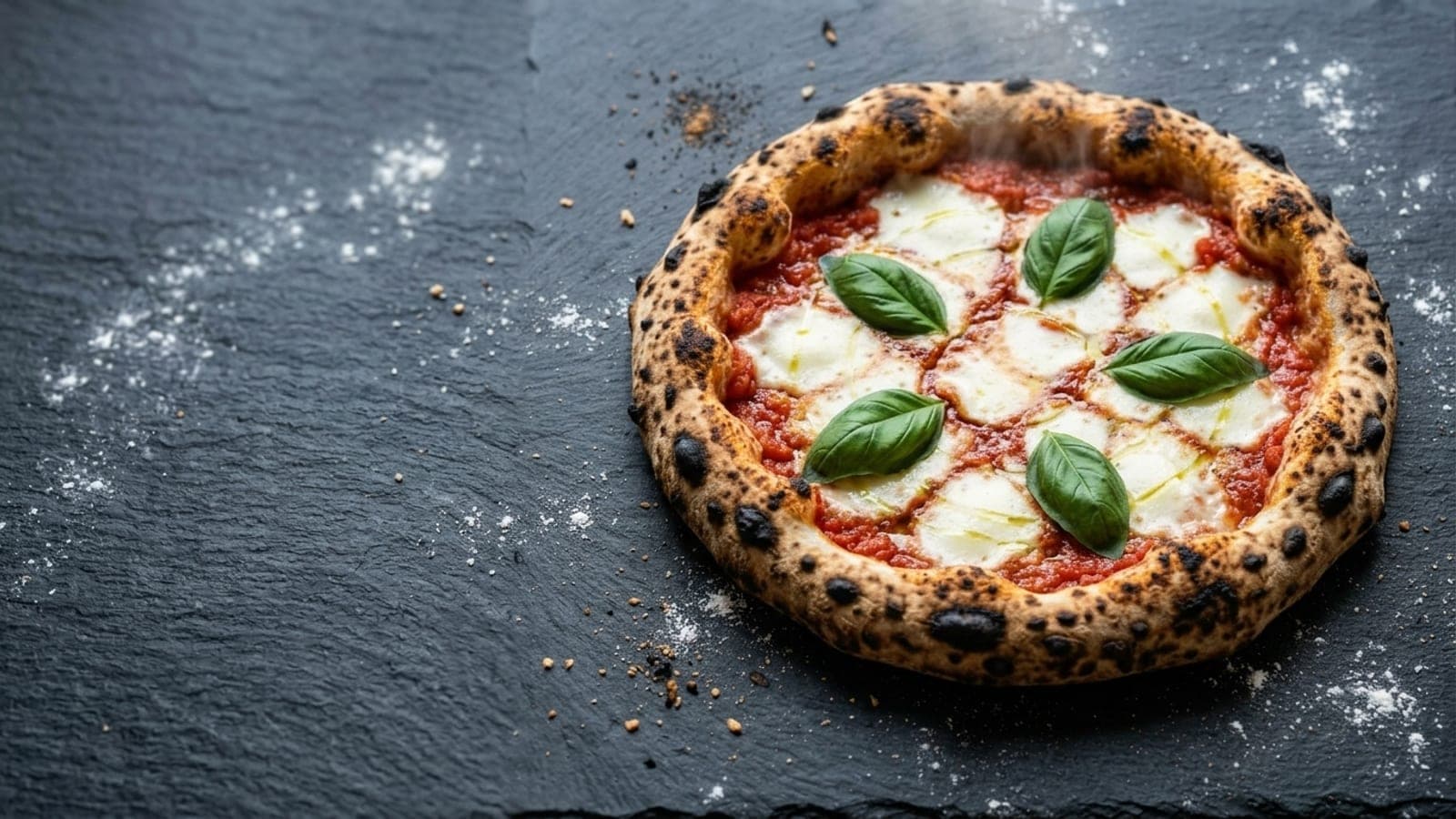
The one true exception is Neapolitan: 450 °C and a 90-second bake make those leopard spots, and no thermostat trick fully gets you there. The closest home approximation: steel on a high rack, a full hour of preheat, then switch to the broiler (grill) for a few minutes before launching so the top element is glowing when the pizza lands. Two to three minutes later you’ll have something genuinely close — puffier and paler than Naples, still wonderful.
The only way to truly hit those temperatures is to step outside: a dedicated outdoor pizza oven (Ooni, Gozney, a wood-fired dome) is built for exactly this bake.
Or simply make the New York instead — it’s the style that loves a home oven back.
Preheat like you mean it
The thermostat light lies. It reports the air temperature, and air heats in minutes — but pizza bakes from the surface it sits on, and a steel or stone needs 45–60 minutes at full blast before it’s truly saturated (pans are quicker: a 30-minute oven preheat is plenty, since the pan goes in with the dough).
Position matters too: steel or stone high in the oven for rounds (closer to the top heat), pans low-to-middle so the base browns before the top dries out. And between pizzas, give the surface a few minutes to recover — the second launch lands on a colder slab than the first.
One launch-day warning: a perfect surface is wasted if the pizza never leaves the peel. Flour the peel, work quick, and if it glues itself down anyway, the stuck-to-the-peel fix has the rescue moves.
Questions from the counter
Do I really need a pizza oven?
Only for true Neapolitan. Everything else on this site bakes beautifully in a domestic oven — that’s 7 of 10 styles. A pizza oven is a lovely toy, not an entry requirement.
Fan (convection) or conventional?
For rounds on steel or stone: conventional, top heat doing the work. Fan dries the surface and steals oven spring (a flat bake has other causes too). For pan styles fan can help — the moving air browns the top while the pan handles the base. If fan is your only mode, drop the dial about 20 °C.
Why is my base pale and floppy?
Almost always the surface: no steel or stone, or one that wasn’t preheated long enough. The base bakes by contact — a hot oven with a cold slab makes toast on top and steamed dough below. The burnt-or-pale-bottom fix sorts the causes, scorched end included.
Can I bake pizza on a barbecue?
Yes — lid down, stone on the grate, and a covered grill becomes a credible pizza oven that easily passes 300 °C. Watch the base: flame underneath is fiercer than any element. In summer, it’s the move.
Enough theory
Every recipe the calculator writes ends with the right oven line for its style — temperature in °C or °F, your choice. Pick the style, and the bake comes with it.
The clock is a suggestion. The dough is the boss. In bocca al lupo!