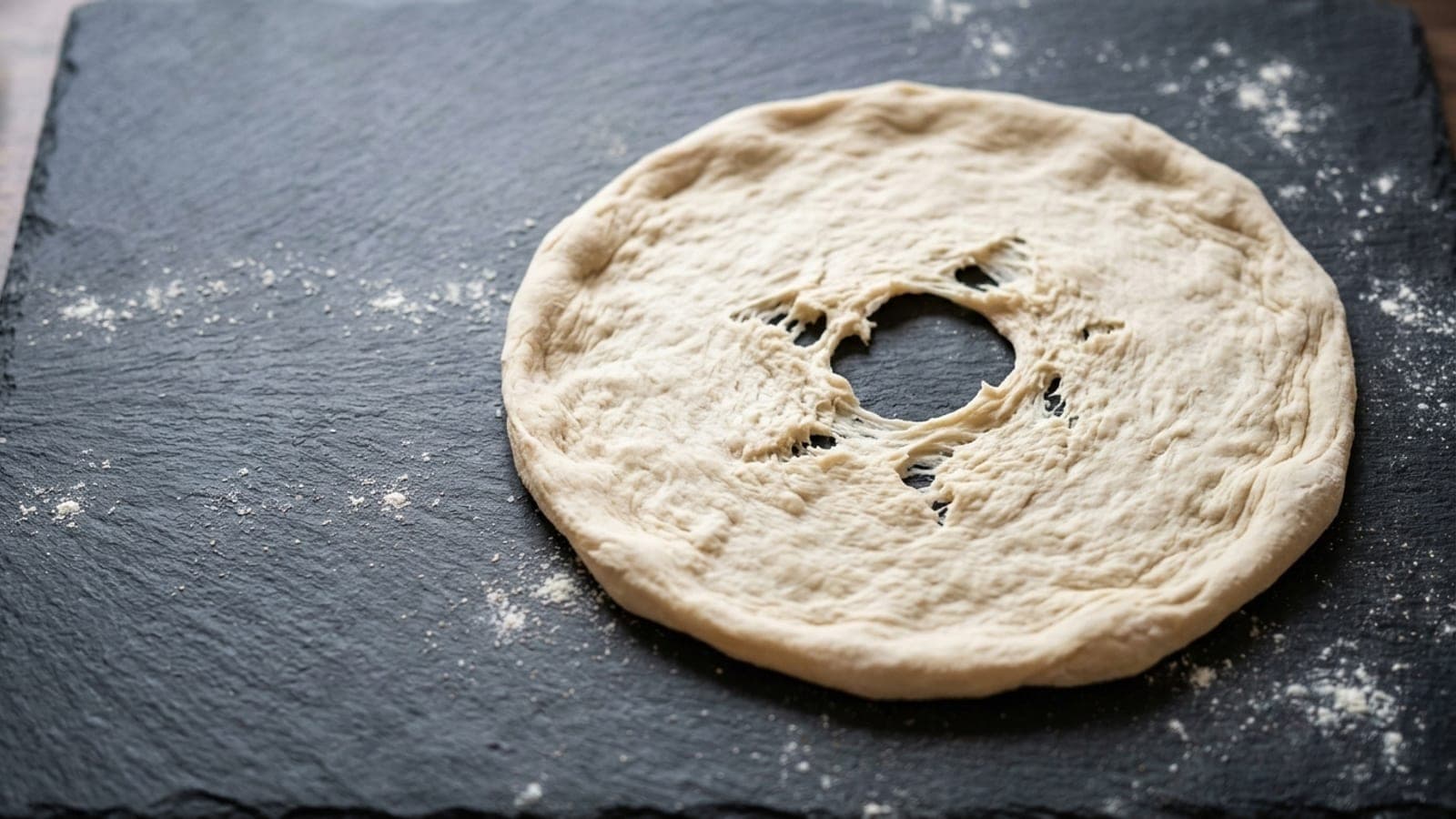
Pizza dough tears when stretching — the fix
Holes appear when the gluten net gives out faster than it can stretch. Usually that's weak or under-developed gluten, sometimes a dry over-floured patch, and very often just going too fast.
Weak or under-developed gluten
How to tell — It tears thin and easily all over, and the whole dough feels fragile rather than springy.
Fix it now — Rest it longer and give it a fold or two, then open it gently — a matured dough holds together far better.
Next time — Use stronger flour for long or wet doughs; weak flour simply runs out of structure first. the flour guide goes deeper.
Stretched too thin in one spot
How to tell — A hole opens right where your thumbs or knuckles pushed hardest.
Fix it now — Pinch the dough back together over the hole and even out the thickness before it goes in the oven.
Next time — Open from the center outward in stages, keeping the round an even thickness instead of chasing diameter. the stretching guide goes deeper.
A dry, over-floured patch
How to tell — The tear starts at a pale, dry spot crusted with bench flour.
Fix it now — Use less flour on the bench and brush off the excess; dry dough has no stretch left in it.
Next time — Dust lightly and lean on a scraper and damp hands instead of piling on flour. the hydration guide goes deeper.
Start from a good recipe
Most dough problems are planned away, not fixed at the bench. Set your real schedule in the calculator and it weighs the dough and writes the timing for you.
The clock is a suggestion. The dough is the boss. In bocca al lupo!