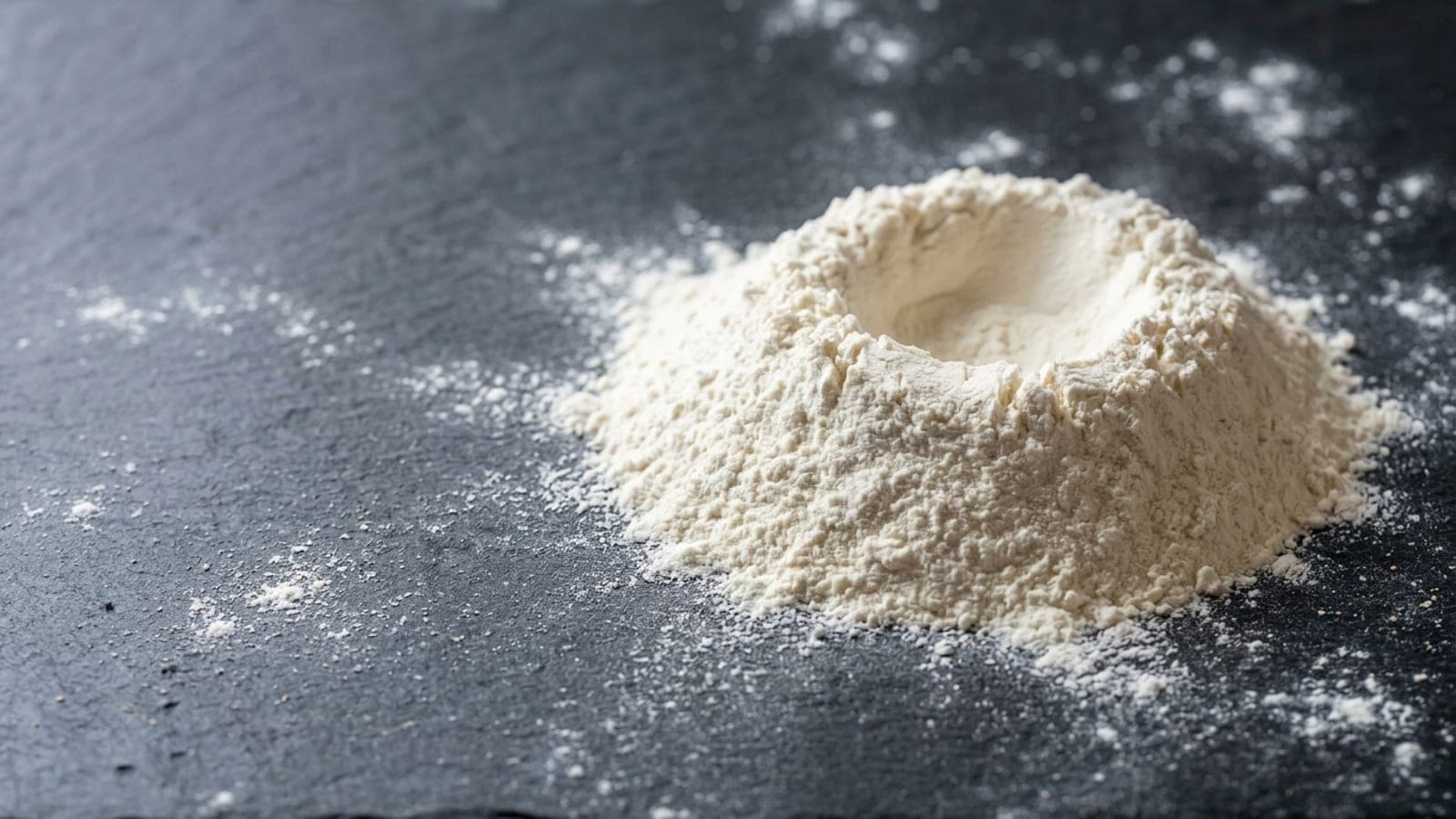
Flour in pizza dough — the guide
The calculator weighs your flour to the gram, then goes politely quiet about the only question left: which bag? This guide answers it — what protein actually does, what the 00 on Italian flour really means (it’s not what most people think), W strength in plain words, and a pick for each of the 10 styles.
One honest note up front: flour type doesn’t change the calculator’s numbers. The percentages are flour-agnostic — what the bag changes is how the dough feels, how much water it carries gracefully, and how long a fermentation it survives.
Protein is the engine
Wheat protein becomes gluten — the elastic net that traps fermentation gas. More protein means a stronger net: more chew, more structure, more water absorbed without turning to soup. Less protein means tenderness and easy rolling, at the price of strength.
The number hides on the nutrition label: grams of protein per 100 g of flour is your percentage. Cake flour idles near 9%, all-purpose sits around 10–12%, bread flour 12.5–14%, and the strongest pizza flours reach 14.5%. Everything in this guide flows from that one figure.
The cast: 00, bread, all-purpose, semola
00— a fineness grade, not a strength: Italy numbers flour by how finely it’s milled (2, 1, 0, 00). A “pizzeria 00” is fine and strong; a supermarket 00 for cakes is fine and weak. Same label, different flour — read the protein.
Bread flour— the anglophone workhorse, 12.5–14% protein. Right for most American pan styles, New York, and any wet dough when proper pizza flour isn’t around.
All-purpose / plain — 10–12%, the gentle middle. Perfect for thin and crispy (which wants extensibility, not muscle) and respectable for same-day doughs anywhere.
Semola rimacinata — finely re-milled durum: golden color, sweet wheat flavor, sandpaper grip. Lovely at 10–20% of a Sicilian blend, unbeatable as a dusting flour, but too brittle to carry a dough alone.
W, the number on Italian bags
Italian mills print a strength index measured by inflating a disc of dough until it bursts: W. In plain words, W is how much fermentation the dough can carry — the higher the number, the longer the gluten lasts before it gives out.
The working ladder: W 200–260 for short, same-day ferments; W 260–320 for classic overnight-to-48-hour plans; W 300–350+ where the dough is very wet, ferments for days, or both. No W on the bag? Protein is a fair proxy — around 12.5% roughly tracks the W 260 neighborhood.
This is why long plans deserve strong bags: every extra day in cold fermentation is another day the gluten has to hold the ceiling up.
Which flour for which style
Each preset, its bag, and the water it must carry:
| Style | Flour | Protein | Water |
|---|---|---|---|
| Neapolitan | Pizzeria 00 | 12–13.5% | 62% |
| New York | Bread flour | 12.5–14% | 63% |
| Roman teglia | Strong 00 or bread flour | 13–14.5% | 78% |
| Sicilian | Bread flour, splash of semola | 12.5–14% | 70% |
| Detroit | Bread flour | 12.5–14% | 70% |
| Thin & crispy | All-purpose or light 00 | 10.5–12% | 56% |
| Focaccia | Bread flour or strong 00 | 12.5–14% | 80% |
| Pinsa | Pinsa blend or strong 00 | 12.5–14% | 80% |
| Grandma | Bread flour | 12–13.5% | 65% |
| Tavern | All-purpose | 10–11.5% | 52% |
Read the last two columns together and the pattern jumps out: the wetter the style, the stronger the flour. Strength is what holds 80% hydration together — the hydration guide explains that ladder from the water’s side.
Questions from the counter
Is 00 flour stronger than bread flour?
The question doesn’t parse — 00 measures grind, not strength. A pizzeria 00 and a good bread flour are near-equals where it counts; the 00 just feels silkier and browns a touch more gently in fierce ovens. The full head-to-head — including the swaps that work — is its own guide.
Can I make pizza with all-purpose flour?
Absolutely — it’s the right call for thin and crispy, and fine for any same-day dough. Just keep it away from the very wet, very long plans: an 80% focaccia on a 10% flour is a ciabatta-shaped apology.
Does changing flour change the recipe?
The grams stay identical — flour type isn’t an input the math needs. But strong flour drinks more, so the same hydration feels drier in the hands; moving up in protein is the moment to be brave about the wet presets.
What about whole wheat?
Swap in 10–20% for flavor without drama. The bran cuts gluten strands, so go gently: add a touch more water (the bran drinks it) and expect a denser, more rustic crumb as the percentage climbs.
My bag lists neither W nor protein — now what?
Read the shelf, not the bag: flour sold as “bread” or “Manitoba” is strong, “cake” or “pastry” is weak, unlabeled “plain” sits in the middle. When in doubt, start a notch drier than the preset and let your hands vote.
Right bag, right numbers
Pick the bag from the table, then let the calculator weigh it — flour, water, salt and the schedule, scaled to your batch. Starting from a recipe in cups? The cups-to-grams converter turns them into grams, by flour type.
The clock is a suggestion. The dough is the boss. In bocca al lupo!