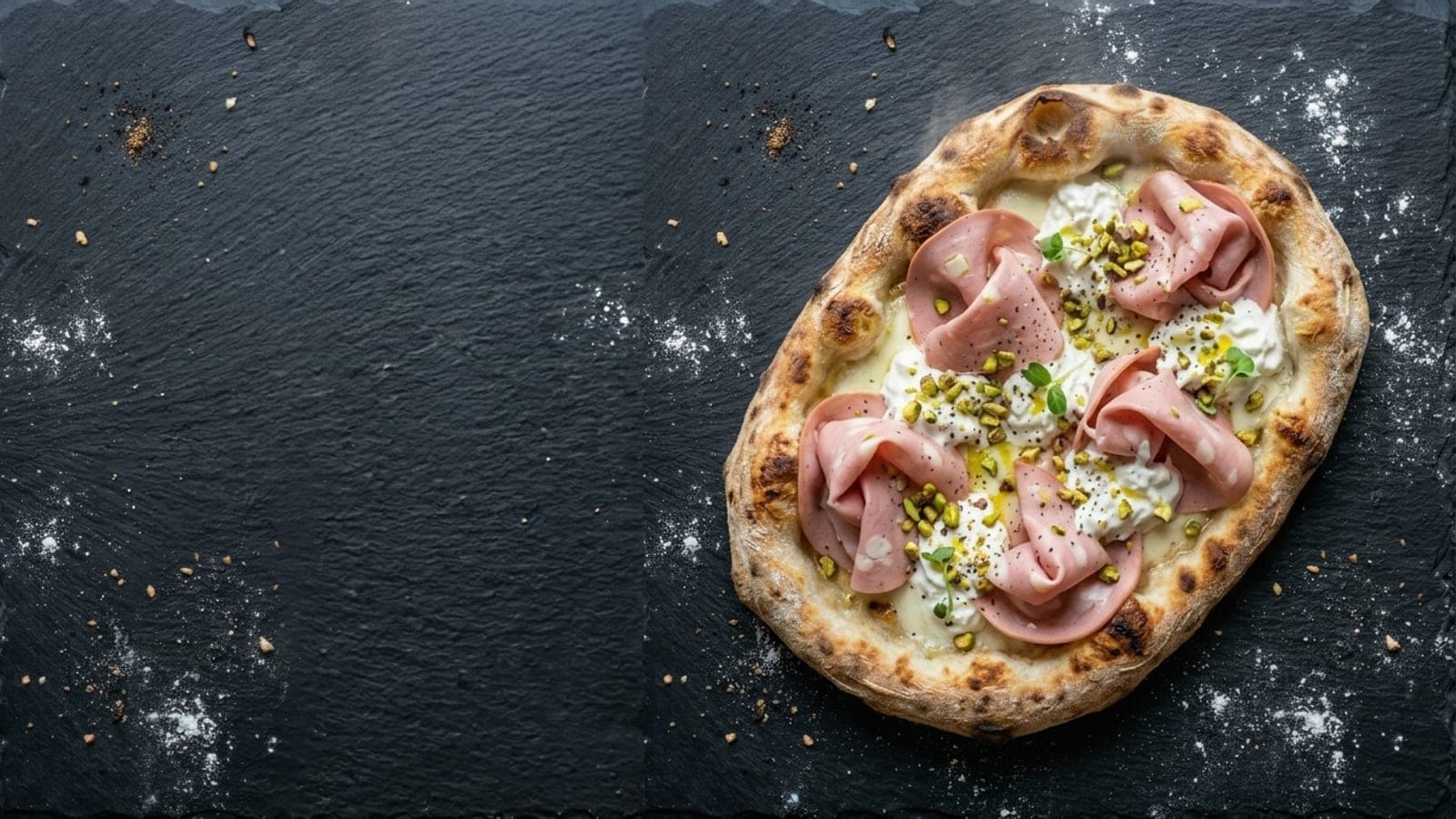
Pinsa mortadella e stracciatella — the recipe
Rome's airy upstart. A pinsa is the long, oval, cloud-light cousin of the pizza — a very wet dough of wheat, rice and soy flour, slow-fermented and baked crisp outside and pillowy within. Its most fashionable dress is this one: mortadella, stracciatella and pistachio, the trattoria trio that quietly took over the city's menus.
The whole move is hot-meets-cold. The base bakes with just a little fresh mozzarella, then comes out of the oven and gets crowned — cool stracciatella spooned over the crisp crust, mortadella draped in soft ribbons, crushed pistachio scattered green over the top. Quantities below are weighed per oval and scale with your dough size.
What goes on top
Per pizza, on the default 230 g ball — in layering order:
roasted, roughly crushed, scattered over the lot
Stretching bigger or smaller? The model rescales with the dough:
| Topping | 180 g ball | 230 g ball | 300 g ball |
|---|---|---|---|
| Fresh mozzarella | 40 g | 50 g | 65 g |
| Stracciatella | 55 g | 70 g | 90 g |
| Mortadella | 55 g | 70 g | 90 g |
| Pistachios | 9 g | 12 g | 15 g |
The dough
Pinsa mortadella e stracciatella is built on Pinsa dough. Airy Roman flatbread — very wet dough, long ferment, stretched to an oval. For 4 × 230 g balls:
| Ingredient | Baker's % | For 4 pizzas |
|---|---|---|
| Flour | 100% | 498 g |
| Water | 80% | 399 g |
| Salt | 2.4% | 12 g |
| Olive oil | 2% | 10 g |
| Yeast | 0.23% | 1.1 g |
The yeast is weighed for an example 8 h rise at 21°C — your kitchen disagrees, and that’s the point: set your real schedule in the calculator and it reweighs the pinch.
How it’s done
- Make the dough: 4 × 230 g Pinsa balls — the calculator weighs the flour, water, salt and yeast for your schedule.
- Stretch each ball on a little flour, pressing the air from the middle out to the rim.
- Top with 50 g fresh mozzarella (a light layer — the melting base under the cold toppings).
- Bake at 300 °C / 572 °F — on a preheated steel or stone if you have one.
- After the bake: 70 g stracciatella — cold from the fridge, spooned over the hot crust.
- After the bake: 70 g mortadella — draped in loose folds, never baked — heat turns it to rubber.
- After the bake: 12 g pistachios — roasted, roughly crushed, scattered over the lot.
Questions from the counter
What's the difference between pinsa and pizza?
Mostly the dough and the shape. Pinsa romana is stretched from a very wet (around 80%) blend of wheat, rice and soy flour given a long, cold ferment, then baked into a crisp, light, oblong oval — airier and less chewy than a round pizza, and easier on the stomach for it. The “ancient Roman” origin story is charming marketing (the modern pinsa dates to the early 2000s), but the eating is real: it's the lightest crust the calculator makes.
Why do the mortadella and stracciatella go on after the bake?
Because heat is their enemy. Stracciatella is cold cream and shredded curd — bake it and it splits into a greasy puddle. Mortadella is already gently cooked; a hot oven renders its fat and turns silk into rubber. Both go on the moment the crust comes out, so the contrast — crisp hot base, cool creamy cheese, supple meat — is the whole point. Like prosciutto crudo, they're a finish, not a filling.
What exactly is stracciatella?
The creamy heart of a burrata, sold on its own: shreds of fresh mozzarella curd loosened in cream. It's milky, rich and barely holds its shape, which is why it's spooned and not sliced. Can't find it? Tear open a ball of burrata and use the soft inside, or pull very fresh mozzarella into shreds and loosen it with a spoonful of cream. (Not to be confused with the gelato or the egg-drop soup of the same name.)
Do I need the special pinsa flour blend?
It helps, but don't let it stop you. The wheat-rice-soy blend is what makes pinsa so light and crisp, and the Pinsa preset weighs the dough around its high hydration. No blend on hand? Strong bread flour with a spoonful of rice flour gets you most of the way — the flour guide has the full story.
Get the dough
The Pinsa preset weighs the balls and writes the schedule — mix, rise, ball, stretch, bake.
The clock is a suggestion. The dough is the boss. In bocca al lupo!