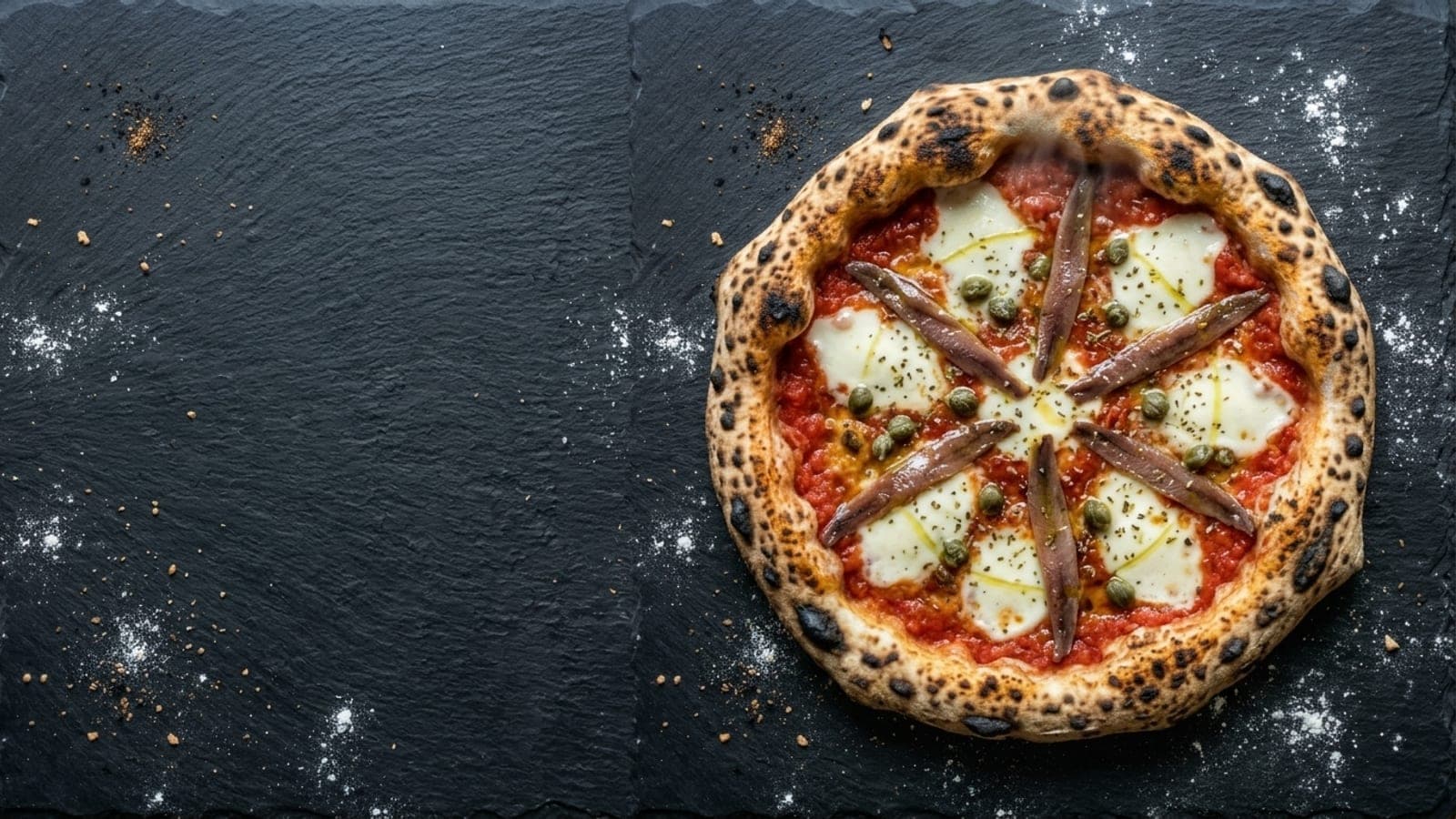
Napoli pizza — the recipe
The pizza that divides a table faster than politics: tomato, mozzarella, and then the brine section — anchovy fillets draped over the cheese, capers scattered between them, oregano dusted over the lot. Done right, the anchovies don't shout fish; they whisper salt, and the tomato does the diplomacy.
Everything below is weighed per ball and scales with your dough. The fillet count is deliberately restrained — an anchovy ration is seasoning, a heap is a dare — and the capers go on rinsed, or the whole pizza tips over the salt cliff.
What goes on top
Per pizza, on the default 260 g ball — in layering order:
a pinch over everything
a thin spiral to tie it together
Stretching bigger or smaller? The model rescales with the dough:
| Topping | 200 g ball | 260 g ball | 320 g ball |
|---|---|---|---|
| Crushed tomatoes | 60 g | 80 g | 100 g |
| Fresh mozzarella | 55 g | 70 g | 85 g |
| Anchovy | 4 fillets | 5 fillets | 6 fillets |
| Capers | 8 g | 10 g | 12 g |
| Dried oregano | 1 g | 1 g | 1 g |
| Extra-virgin olive oil | 3 g | 4 g | 5 g |
The dough
Napoli is built on Neapolitan dough. Soft, leopard-spotted cornicione. Flour, water, salt, yeast — nothing else. For 4 × 260 g balls:
| Ingredient | Baker's % | For 4 pizzas |
|---|---|---|
| Flour | 100% | 630 g |
| Water | 62% | 391 g |
| Salt | 2.8% | 18 g |
| Yeast | 0.23% | 1.4 g |
The yeast is weighed for an example 8 h rise at 21°C — your kitchen disagrees, and that’s the point: set your real schedule in the calculator and it reweighs the pinch.
How it’s done
- Make the dough: 4 × 260 g Neapolitan balls — the calculator weighs the flour, water, salt and yeast for your schedule.
- Stretch each ball on a little flour, pressing the air from the middle out to the rim.
- Top with 80 g crushed tomatoes.
- Top with 70 g fresh mozzarella (torn and well drained).
- Top with 5 anchovy fillets (oil-packed fillets, draped over the cheese like spokes).
- Top with 10 g capers (rinsed and squeezed dry).
- Top with 1 g dried oregano (a pinch over everything).
- Top with 4 g extra-virgin olive oil (a thin spiral to tie it together).
- Bake at 450 °C / 842 °F — that is pizza-oven territory; at home, run the oven at full blast on a steel or stone and give it an extra minute or two.
Questions from the counter
Why do Neapolitans call this pizza 'Romana'?
The great naming paradox: in Naples, tomato-mozzarella-anchovies-oregano is the pizza Romana; in Rome and almost everywhere else, the same pizza is the Napoli or Napoletana. Each city points at the other across the anchovy. Order by ingredients when in doubt — the fish doesn't care what it's called.
The anchovies overpower everything — what did I do wrong?
Probably nothing but the dose or the timing. Keep to the fillet count in the table, drape the fillets whole instead of chopping them (chopped anchovy seasons every bite; whole fillets season some), and if they still bully the pizza, add them in the last minute of the bake or right after it so they warm through without dissolving into the cheese.
Salt-packed or oil-packed anchovies?
Salt-packed are the connoisseur's pick — firmer, rounder, less fishy — but they need rinsing, soaking and filleting first. Good oil-packed fillets straight from the jar are the honest weeknight call and what the table weighs. Either way, buy few and buy decent: this pizza has nowhere to hide a sad anchovy.
Get the dough
The Neapolitan preset weighs the balls and writes the schedule — mix, rise, ball, stretch, bake.
The clock is a suggestion. The dough is the boss. In bocca al lupo!