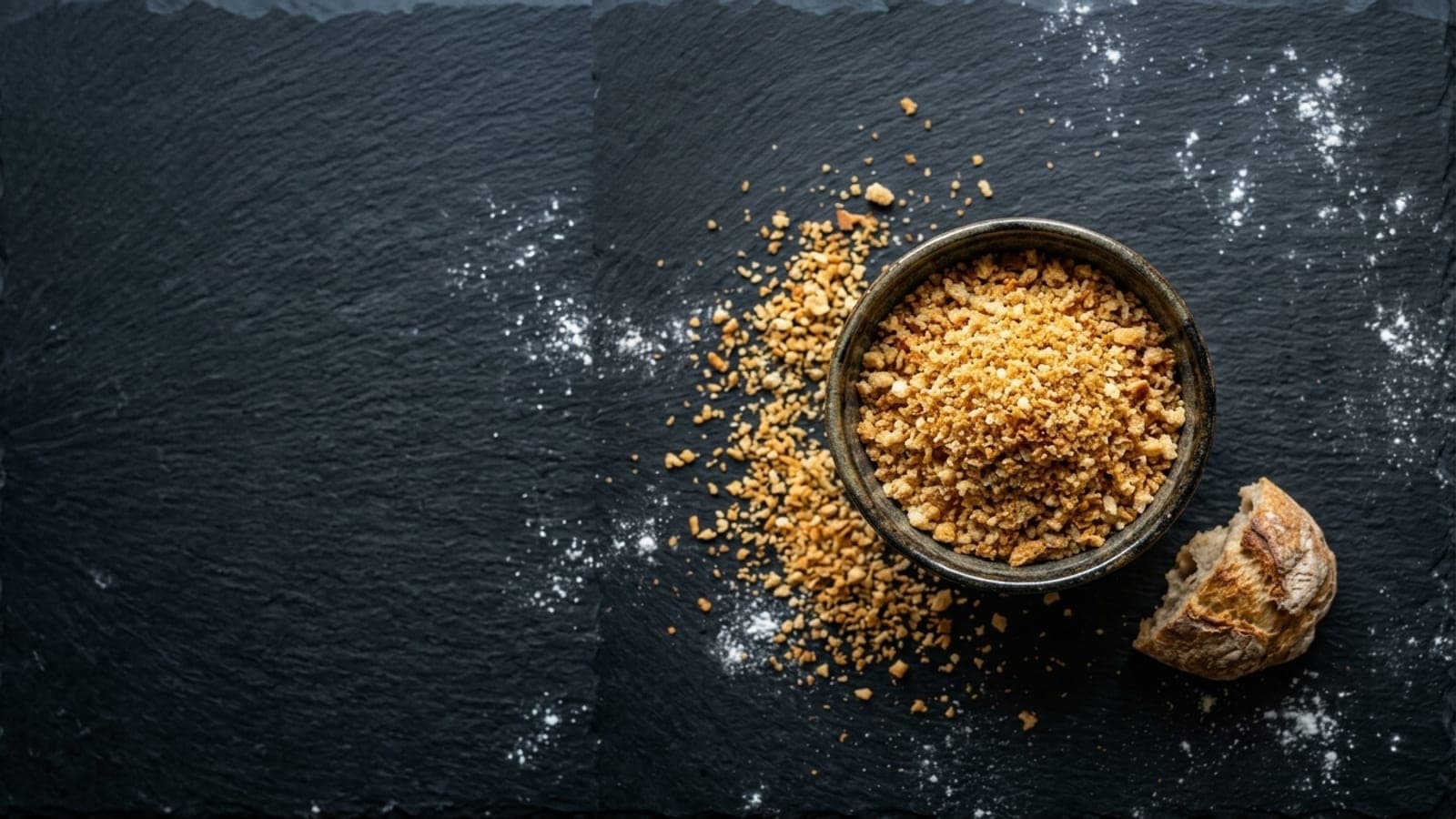
Breadcrumbs on pizza — the topping
The most overlooked topping on the sfincione isn't one you'd think of as a topping: a fistful of toasted breadcrumbs scattered over the top, drinking the surface oil and crisping into a savory crust over the soft sponge. In Sicily it's mollica — the poor man's parmesan — and it's doing structural work, not garnish.
One classic here is built around it — the sfincione — weighed per pizza. This page is what to make them from, how to toast them right, and the dose from the same registry the recipe page scales.
What to buy
Don't buy them — make them. The fine sand-colored stuff in the can is dust; real mollica comes from stale bread, the one ingredient every kitchen makes for free. A day-or-two-old rustic loaf, crusts and all, torn and blitzed or grated to coarse crumbs, is exactly right — coarse beats fine, because coarse crumbs crunch where fine ones go to powder.
If you must buy, panko is the honorable shortcut — coarse, dry, built to crisp — and Italian-style dried breadcrumbs do at a pinch. Whatever you start with, it still gets toasted: raw crumbs of any kind just go soggy on the pizza.
Working with it
The recipe note is the whole job — toasted, scattered over the top so they crisp in the oven — but the toasting comes first, in a pan, before they reach the pizza. Warm coarse crumbs in a glug of olive oil over medium heat, stirring, until they're golden and smell like toast. This is also where Sicily sneaks flavor in: a mashed anchovy, a little garlic, a grating of pecorino, a pinch of oregano all belong in that pan.
Then they go on last, scattered over the sauce and cheese so the surface oil and the oven finish crisping them. Don't bury them, and don't skip the pan: raw crumbs scattered on top spend the bake absorbing moisture and turn to paste — the opposite of the crunchy crust the whole pizza is built to deliver.
On the pizzas
The classics that use it, with the amount each takes at its default size — the same numbers their recipe pages scale to your dough:
| Pizza | Per pizza | When |
|---|---|---|
| Sfincione | 40 g | before the bake |
Questions from the counter
Breadcrumbs on pizza — really?
Really, and not a mistake. Toasted breadcrumbs are a southern Italian staple — mollica or pangrattato, the “poor man's parmesan” — strewn over pasta and pizza for crunch and a toasty, savory note where cheese would be the expensive option. On the sfincione they're the textural counterpoint that keeps a soft, oily, oniony square from going one-note.
What bread makes the best mollica?
Stale rustic white bread — a country loaf, ciabatta, the heel of a baguette — crusts included, a day or two old so it grates or blitzes into coarse, dry crumbs. Fresh bread gums up the grater and steams instead of toasting. This is the original use for the loaf you didn't finish, which is half the charm.
Can I add cheese or anchovy to them?
That's the traditional move, not a liberty. Toasting the crumbs in olive oil with a mashed anchovy, a little garlic, oregano and a grating of pecorino turns plain mollica into the seasoned topping Sicily actually uses. Keep it restrained — the crumbs are seasoning, not a second sauce — and salt lightly, since the anchovy and pecorino already bring it.
Put it on a pizza
The dough is the calculator’s job and the doses are scaled on the recipe pages — this one is ready for the classic below.
The clock is a suggestion. The dough is the boss. In bocca al lupo!