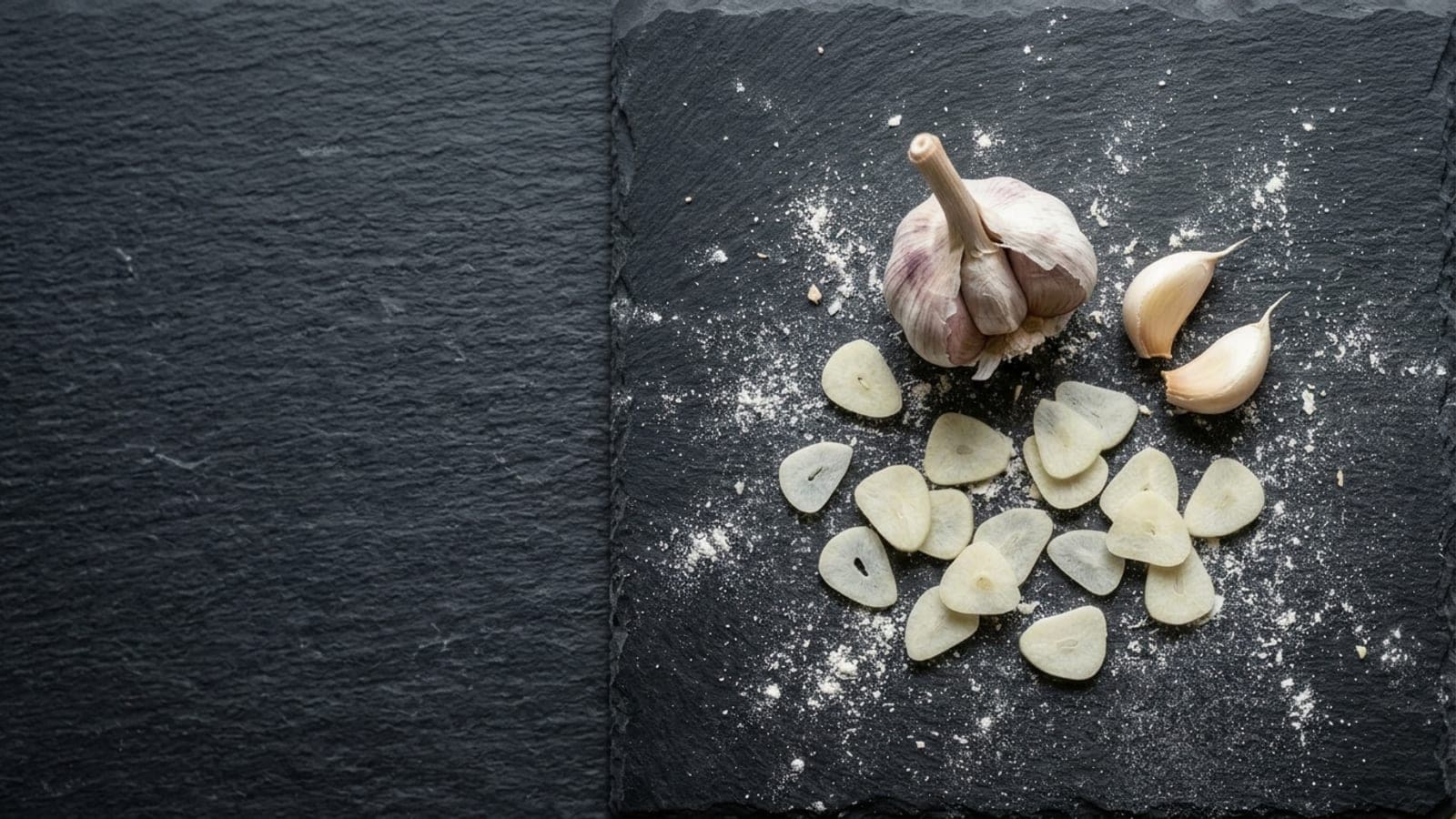
Garlic on pizza — the topping
Garlic is the marinara's whole personality — the pizza that dares to face a roaring oven with no cheese to hide behind. It's also the topping with the narrowest window between perfume and punishment: thin and oiled it roasts sweet, thick and naked it scorches bitter.
This page is how to keep it on the right side of that line, with the dose counted in cloves from the same registry the marinara page scales.
What to buy
Buy heads, not jars: pre-minced garlic in brine has already traded its bite for shelf life and brings a sour, steamed note no bake can fix. A good head is heavy for its size and tight in its paper, with no green shoots — the sprout is where the bitterness lives.
Fresh-season garlic is milder and juicier; garlic that has wintered in the cupboard grows louder. Neither is wrong — just remember which one you're holding when you decide how brave to be.
Working with it
The marinara's instruction is two words long — sliced paper-thin — and it's doing all the work. Slivers that thin par-roast in the bake and turn sweet at the edges; chunks stay raw inside while their corners burn. Slice with a sharp knife or shave on a peeler, and let the olive oil cover them: oiled garlic roasts, dry garlic carbonizes.
Spread the slices out rather than clustering them — every slice should own a little territory of tomato and oil. The dose is small on purpose; raw garlic concentrates as it cooks, and the marinara is a conversation, not a contest.
Want the mellow, even version of the same idea — or a white pie with no tomato to carry it? Garlic oil is the recipe.
On the pizzas
The classics that use it, with the amount each takes at its default size — the same numbers their recipe pages scale to your dough:
| Pizza | Per pizza | When |
|---|---|---|
| Marinara | 2 cloves | before the bake |
| Grandma | 2 cloves | before the bake |
Questions from the counter
Why did my garlic burn?
Thickness, nakedness or time — usually all three. Slices past paper-thin can't cook through before their edges char; garlic sitting dry on top of everything has no oil to roast in; and a long home-oven bake is exactly the marathon raw garlic loses. Slice thinner, tuck it under the oil, and on slow bakes consider garlic oil instead — same destination, no jeopardy.
Raw, powder or oil — which garlic for which pizza?
Raw paper-thin slices for fast, hot bakes where they roast rather than linger — that's the marinara's move. Garlic powder belongs in the New York sauce, of all unlikely places: it's the authentic slice-shop seasoning, and fresh garlic scorches under that longer bake. Garlic oil is the white-pie answer, doing a sauce's job where there's no tomato.
How much garlic does a marinara actually take?
Less than enthusiasm suggests. The dose table above counts it in cloves at the default ball, and the marinara page rescales it with your dough — the right amount reads as warmth in the tomato, not as a vampire deterrent. If you're chasing a garlic-forward pizza, the honest route is garlic oil brushed on a white base, not triple the slices.
Put it on a pizza
The dough is the calculator’s job and the doses are scaled on the recipe pages — this one is ready for any of the classics above.
The clock is a suggestion. The dough is the boss. In bocca al lupo!