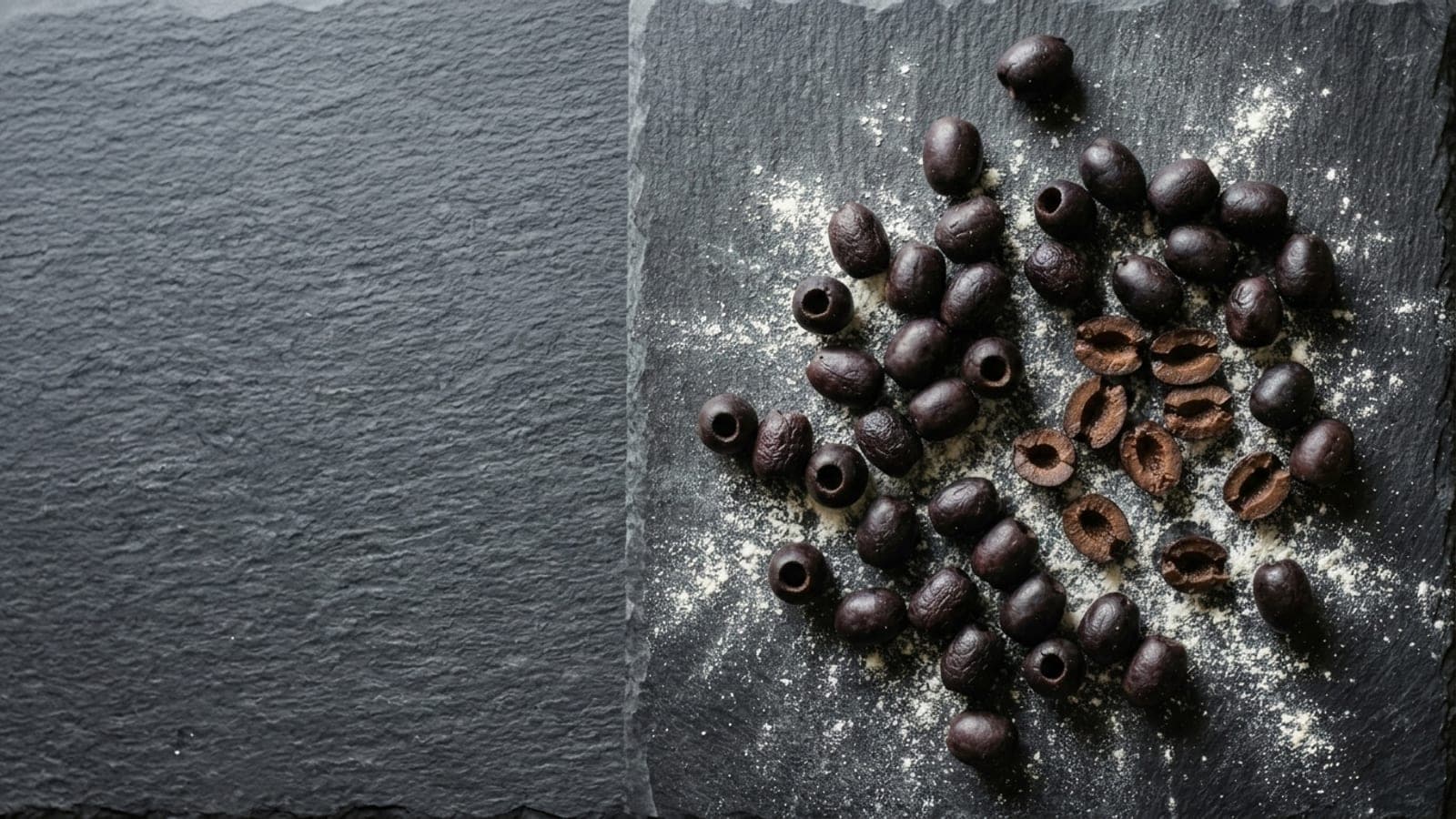
Olives on pizza — the topping
Olives are the smallest opinion on the pizza and the hardest one to ignore: every slice they land on becomes an olive slice. The capricciosa and the quattro stagioni both deploy them — counted, not weighed, because nobody in any kitchen has ever weighed a handful of olives.
This page is which olives to buy, the one non-negotiable rule, and the counts from the same registry the recipe pages scale.
What to buy
The Italian picks are taggiasca and Gaeta — small, purple-black, fruity, sized so a whole olive is one bite of one slice. Kalamata is the louder Greek cousin and a fine pizza olive if the rest of the table can keep up. Buy them in brine or oil with the pits in when you can; flavor clings to the stone, and pitting a handful takes a minute with the flat of a knife.
The canned 'ripe' black olive — mild, springy, faintly nostalgic — is the American slice-shop classic. It's a legal pizza olive and a completely different argument: texture and punctuation rather than flavor. Know which pizza you're making.
Working with it
The recipes' one rule arrives with its own reasoning: pitted — nobody bites a stone twice. Pit them even if the jar claims someone already did; a single survivor funds a dentist's holiday. Leave small olives whole and halve big ones — a whole taggiasca is a burst of brine, a halved Kalamata lies flat and roasts.
Give briny olives a quick rinse so their salt doesn't stack on the cheese's, pat them dry, and scatter with intent: olives are punctuation, and the bake doesn't transform them — they come out of the oven the same olives they went in, just warmer and more sure of themselves.
On the pizzas
The classics that use it, with the amount each takes at its default size — the same numbers their recipe pages scale to your dough:
| Pizza | Per pizza | When |
|---|---|---|
| Capricciosa | 7 olives | before the bake |
| Quattro stagioni | 5 olives | before the bake |
| Focaccia barese | 13 olives | before the bake |
Questions from the counter
Green or black olives?
Both are legal; they're different sentences. Black (fully ripened) olives read classic Italian on the capricciosa and stagioni — rounder, fruitier, quieter. Green olives are younger, firmer and sharper, and they keep their crunch through the bake. If the jar in your fridge is green, the pizza will survive; if you're shopping, buy black.
Why does the recipe count olives instead of weighing them?
House arithmetic: toppings nobody weighs get a per-piece weight in the registry and render as counts — same trick as basil leaves and garlic cloves. The table above shows the count at each pizza's default size, and the recipe pages rescale it with your dough, which is how a bigger ball politely earns an extra olive.
Do olives go on before or after the bake?
Before — they ride the oven with everything else, per the recipes. They're already cooked by the curing, so the bake just warms them through and concentrates them a little. If you love a raw, sharp olive note, a few extra scattered after the bake is a garnish, not a sin — but the weighed dose assumes they went in.
Put it on a pizza
The dough is the calculator’s job and the doses are scaled on the recipe pages — this one is ready for any of the classics above.
The clock is a suggestion. The dough is the boss. In bocca al lupo!