Onions on pizza — the topping
Onions change character completely over five minutes in a pan. Raw, they bite and crunch and can bully a whole pizza; stewed soft first, they turn sweet and jammy and melt into the background in the best way. The sfincione picks the second road, and that choice is most of the flavor.
Palermo's great square carries them here — the sfincione — weighed per pizza. This page is the raw-or-cooked call, red vs yellow, and the dose from the same registry the recipe page scales.
What to buy
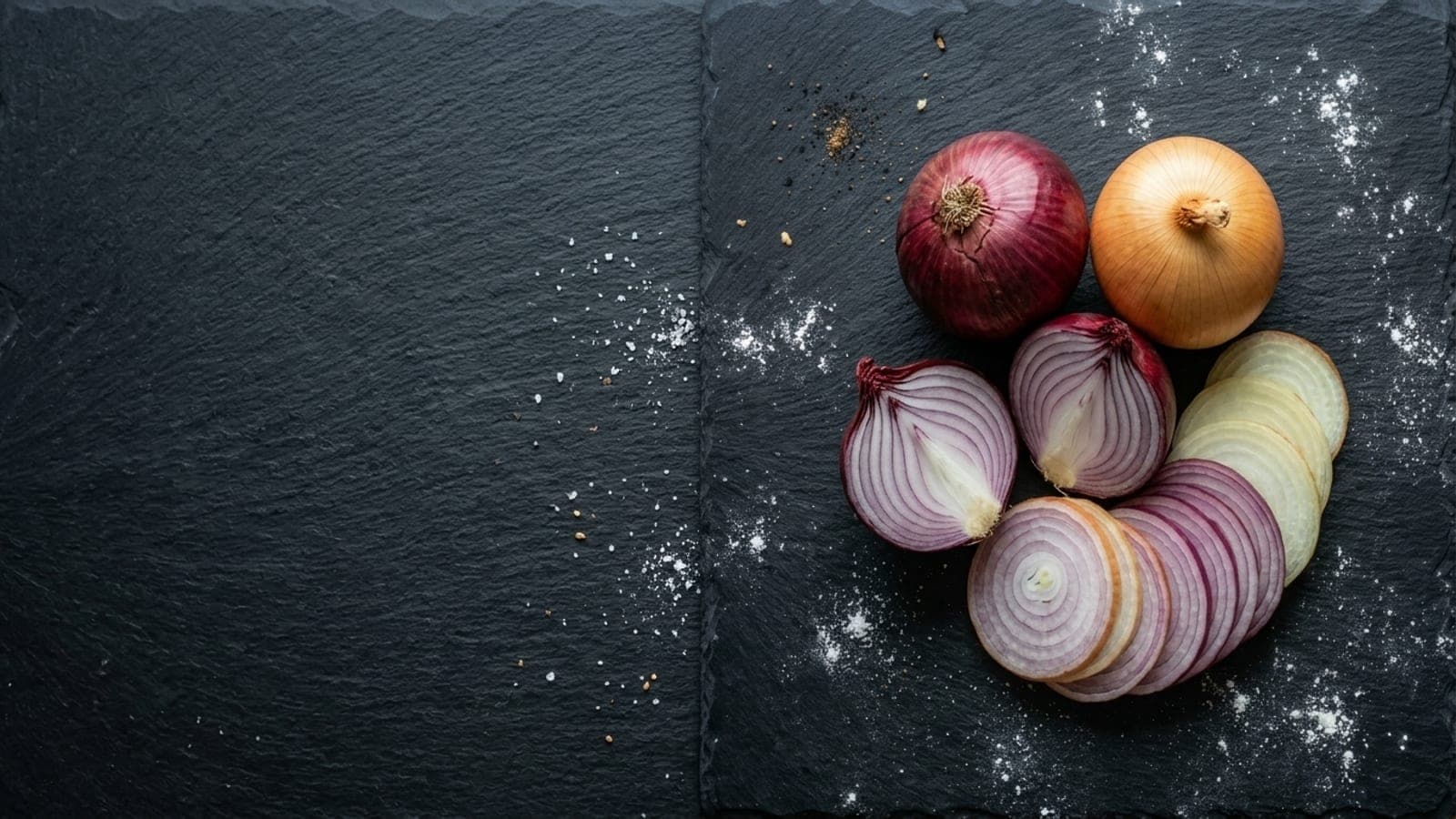
Yellow onions are the all-purpose pizza onion: sharp raw, deeply sweet once cooked, and cheap. Red onions are milder and prettier — the ones to slice raw and thin over a finished pie or a white pizza, where the color survives. Sweet onions (Tropea, Vidalia) are the luxury for a slow-cooked topping, almost candied by the time they're done.
Buy firm, heavy onions with dry papery skins and no green shoots or soft spots — a sprouting onion has spent its sugar on the shoot. For the sfincione's stewed topping, quantity worries less than patience: onions cook down to about a third of their raw volume, so a pile that looks like too much is about right.
Working with it
The sfincione's note is the method in six words — sliced thin and stewed soft in olive oil first — and “first” is load-bearing: the onions do their cooking in the pan, not on the pizza. Slice them thin, cook them low and slow in good oil with a pinch of salt until they slump golden and sweet, then let them cool before they go on. Rushed, scorched onions turn bitter; properly stewed ones are half the sauce.
Raw onions are a different topping with a different rulebook: slice them paper-thin (a thick raw ring stays sharp and squeaky through the bake), soak the slices in cold water for ten minutes if you want to tame the bite, and scatter them light — raw onion is loud. On a baked pizza they soften but keep an edge; over a finished one they stay crisp and bright.
On the pizzas
The classics that use it, with the amount each takes at its default size — the same numbers their recipe pages scale to your dough:
| Pizza | Per pizza | When |
|---|---|---|
| Sfincione | 120 g | before the bake |
Questions from the counter
Raw or cooked onions on pizza?
Both are right, for different pizzas. Slow-stewed onions are sweet, mellow and melt into the background — the sfincione's move and the safe default. Raw onions, sliced paper-thin, bring a sharpness and crunch that cuts rich cheese — fine scattered light, punishing in a thick pile. When in doubt, cook them: a wet, sharp raw onion sabotages more pizzas than it saves.
Why are my onions burning on the pizza?
Raw tips and thin slices scorch fast under direct top heat while the rest of the pie catches up. The fix is the sfincione's — stew them soft before they ever see the oven, so they only need to warm through. If you want raw onion's bite, slice it thinner and scatter it sparser, or add it in the last couple of minutes of the bake.
Red or yellow onions?
Yellow for cooking — they hold the most sugar to caramelize. Red for raw — milder, prettier, and the color holds up where a finished pizza shows it off. Sweet onions (Tropea, Vidalia) split the difference and stew into something almost jammy. The sfincione traditionally takes yellow or sweet, cooked down; save the red rings for the top of a white pie.
Put it on a pizza
The dough is the calculator’s job and the doses are scaled on the recipe pages — this one is ready for the classic below.
The clock is a suggestion. The dough is the boss. In bocca al lupo!