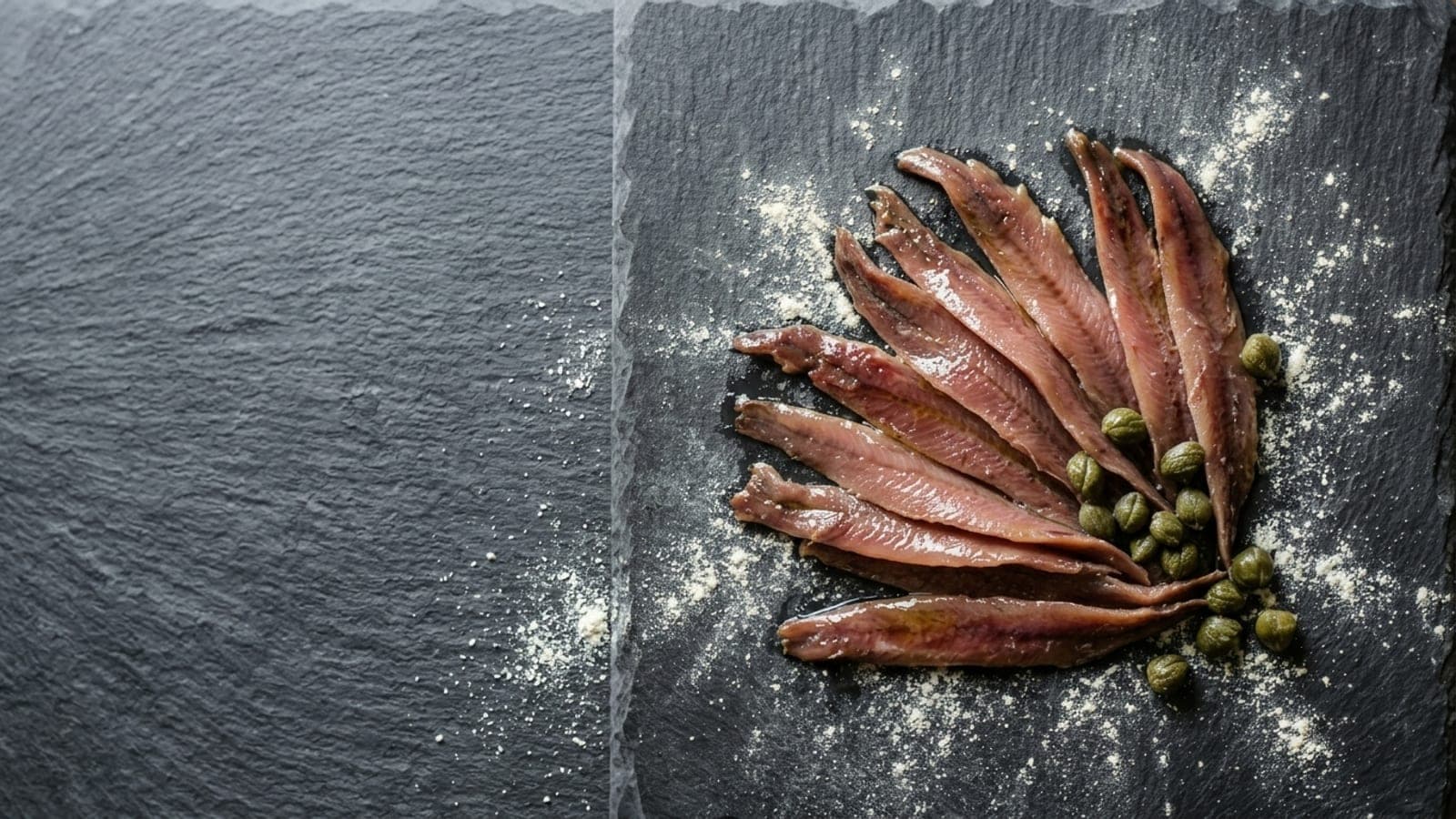
Anchovies & capers on pizza — the topping
No topping clears a room faster or earns its place harder: the napoli's anchovy is seasoning, not seafood — five fillets of deep, savory salt draped over the cheese, with capers landing the brighter green notes between them. Most anchovy hate is really bad-anchovy hate, and the fix happens at the shop, not in the oven.
This page is the pizza's whole brine section: which jar of each to buy, the rinsing discipline, and the doses — counted and weighed from the same registry the napoli page scales.
What to buy
Buy anchovy fillets in olive oil, in glass so you can see what you're getting: whole, unbroken, pink-brown to garnet. Gray mush is the jar that taught the world to hate anchovies. Salt-packed whole anchovies are the upgrade with homework attached — rinse, soak, fillet — worth it when the pizza is the occasion, optional on a weeknight.
Capers come brined or salt-packed, and small beats big: little nonpareils, or Italy's salt-packed Pantelleria capers, carry the most perfume with the least squish. Salt-packed keep the firmest bite; they just insist on a thorough rinse — which, conveniently, the recipe was going to demand of any caper anyway.
Working with it
The napoli's geometry is written in its note — oil-packed fillets, draped over the cheese like spokes — and the spokes are the point: whole fillets laid like a wheel mean every slice gets its ration and nobody gets ambushed. Don't chop them into the sauce on this pizza; a chopped fillet seasons everything evenly, and the napoli's whole argument is salt in deliberate places.
The capers go on rinsed and squeezed dry, straight from the recipe. Brine or packing salt rides on their surface, and a wet caper spends the bake leaking it over the cheese — rinse them under the tap, squeeze them in a paper towel, and scatter them between the spokes so each lands as its own small green spark.
On the pizzas
The classics that use it, with the amount each takes at its default size — the same numbers their recipe pages scale to your dough:
| Pizza | As | Per pizza | When |
|---|---|---|---|
| Napoli | Anchovy | 5 fillets | before the bake |
| Napoli | Capers | 10 g | before the bake |
| Sfincione | Anchovy | 8 fillets | before the bake |
Questions from the counter
Do the anchovies go on before or after the bake?
Before — they ride the oven with everything else, melting their edges into the tomato and cheese, and the dose is weighed for that. If they still read too loud for your table, the napoli page's own escape hatch applies: add them in the last minute of the bake, or right after it, so they warm through without dissolving. The count stays the same either way.
Can I use boquerones — the white marinated ones?
Not in the oven. Boquerones are fresh anchovies cured in vinegar — a different ingredient wearing the same fish: pale, soft and bright, and a bake turns them gray and sour. Drape them over a finished white pie instead, where they behave like crudo. The napoli wants the brown salt-cured fillet, which was built to stand next to hot tomato.
Salt-packed or brined capers?
Salt-packed are the caper at its most caper — firmer, more floral, no vinegar accent — and the rinse they need is one the recipe already orders for both kinds. The brined nonpareils at the supermarket are completely legitimate; just taste one first. Some brines bring real vinegar, and a sharply pickled caper tugs the whole pizza sideways.
Put it on a pizza
The dough is the calculator’s job and the doses are scaled on the recipe pages — this one is ready for any of the classics above.
The clock is a suggestion. The dough is the boss. In bocca al lupo!