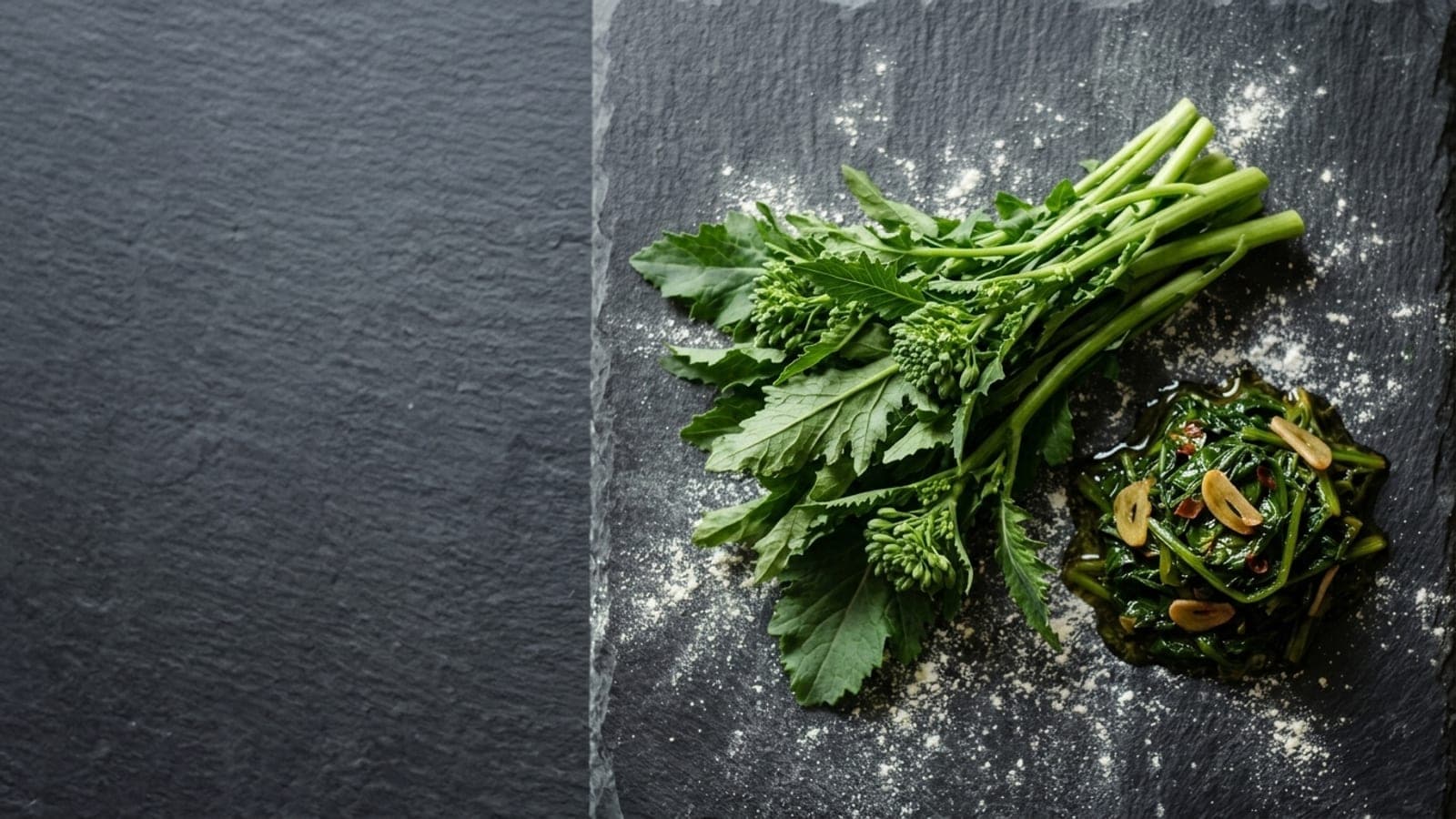
Friarielli on pizza — the topping
Naples keeps a green the rest of the world files under bitter: friarielli — broccoli rabe, cime di rapa, rapini, depending on who's selling it — the jagged-leafed almost-broccoli that gives the city's favorite white pizza its spine. Cooked right and squeezed hard, the bitterness stops being a challenge and becomes the whole point.
One classic carries it here — the salsiccia e friarielli — and this page is the rest of the story: what to ask for at the market, the sauté-and-squeeze, and the dose from the same registry the recipe page scales.
What to buy
At the market it answers to broccoli rabe, rapini or cime di rapa — the same plant in different accents. Buy bunches with slim stems, perky jagged leaves and tight buds showing no yellow flowers; open flowers mean the bitterness has gone from noble to cranky. It cooks down dramatically, so a bunch that looks like too much is about right.
The jar is legitimate: Neapolitan groceries sell friarielli already sautéed in oil with garlic and chili, and that's exactly what half of Naples puts on this pizza on a weeknight — drain and squeeze them as if you'd cooked them yourself. Frozen rabe works too: thaw, squeeze ruthlessly, and give it a fast pan to wake it up.
Working with it
The recipe note is the whole method — sautéed with garlic and chili, squeezed firmly dry — and in that order. Strip the toughest stem ends, then into a wide pan with olive oil, a crushed clove and a pinch of chili until the stems go tender. No blanching needed unless you're taming the bitterness on purpose.
Then the squeeze, which separates a Naples pizza from a wet one: cooked greens hold astonishing water, and the cream base brings all the moisture the pizza has room for. Press the friarielli in your fists or twist them in a clean towel until they stop giving, and they'll land as loose, almost-dry tangles, each with a little territory among the sausage.
Want the cool white base these greens land on? Mozzarella cream is the recipe.
On the pizzas
The classics that use it, with the amount each takes at its default size — the same numbers their recipe pages scale to your dough:
| Pizza | Per pizza | When |
|---|---|---|
| Salsiccia e friarielli | 60 g | before the bake |
Questions from the counter
Friarielli, broccoli rabe, rapini, cime di rapa — which do I buy?
Any of them — they're one plant traveling under regional names: friarielli in Naples, cime di rapa in the rest of Italy, rapini or broccoli rabe in North America. The one to watch for is broccolini, which looks the part but is a sweeter hybrid — fine in a pinch, but you lose the noble bitterness that makes the sausage and cream earn their place.
How bitter is it supposed to be?
Assertively — that's the job. Against rich sausage and cool mozzarella cream, the bitterness is what keeps the pizza from going monotonous, the way the garlic and chili in the pan are its allies rather than cover. If your bunch runs harsh, blanch it for a minute in salted water before the sauté; that rounds the edge off without sanding the green flat.
Can I use spinach or kale instead?
You can top a pizza with them, but you've changed the dish: spinach is meek and very wet, kale is sturdy and won't wilt into tangles. The closer stand-ins keep the bite — turnip greens or mustard greens, cooked the same way, or broccolini for texture at the cost of the bitterness. Whatever the green, the squeeze rule is non-negotiable.
Put it on a pizza
The dough is the calculator’s job and the doses are scaled on the recipe pages — this one is ready for the classic below.
The clock is a suggestion. The dough is the boss. In bocca al lupo!