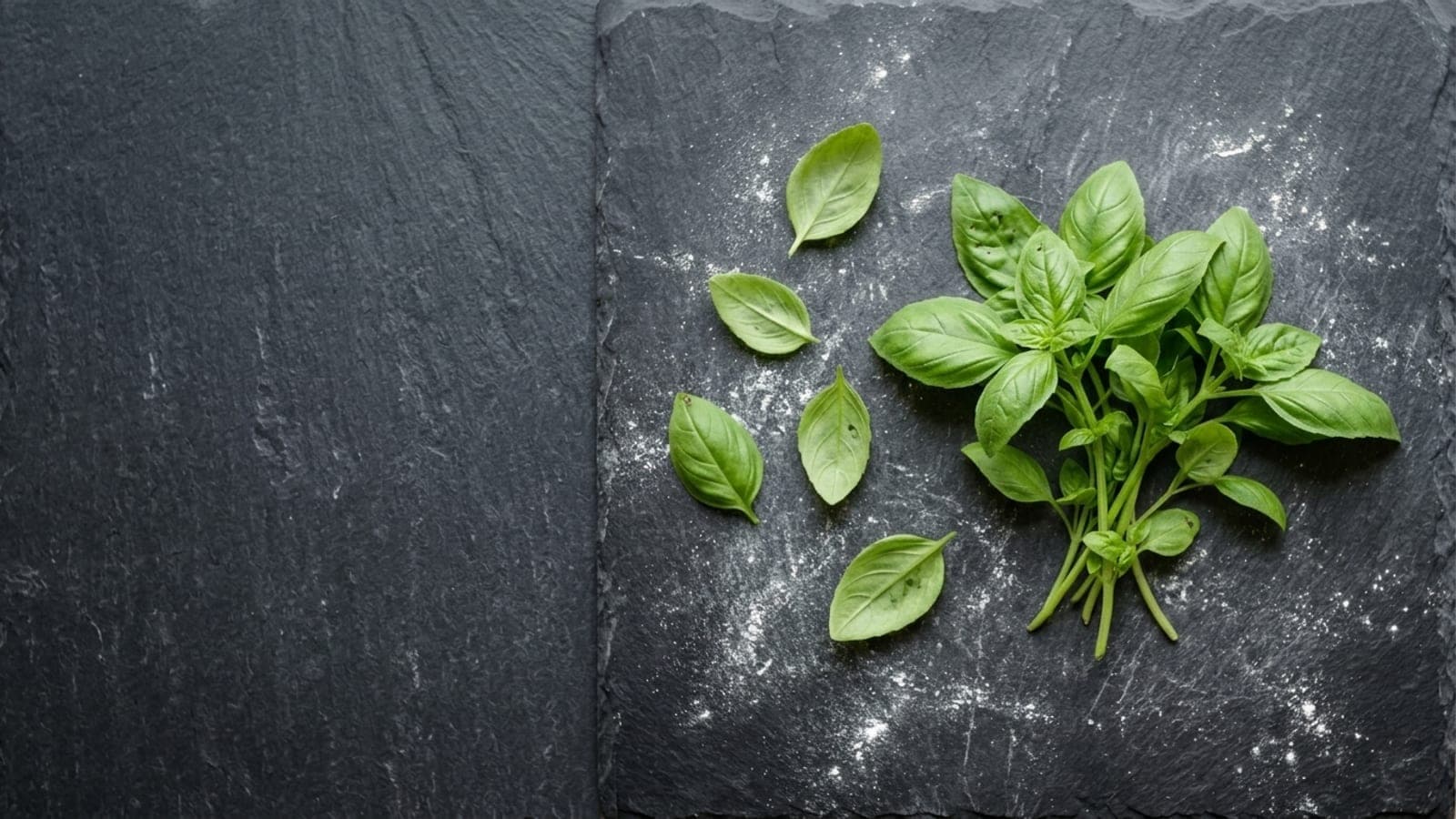
Basil on pizza — the topping
One ingredient on the margherita does no melting, no browning, no stretching — and still decides whether the pizza is right. Basil is five leaves of work with infinite capacity for going wrong: black and bitter when the oven gets it, invisible when it hides under the cheese.
This page settles the timing question, covers buying and keeping it, and counts the dose in leaves — straight from the same registry the margherita page scales.
What to buy
Buy bunches with perky, matte leaves and no black edges — sweet Genovese basil is the pizza variety, and the supermarket's potted plant is the cheapest pizza upgrade there is: it keeps producing leaves on the windowsill long after a cut bunch has given up.
Keep a cut bunch like flowers: stems in a glass of water on the counter, a loose bag over the top. Not the fridge — cold blackens basil faster than the oven does.
Working with it
The timing argument has a boring resolution: both sides are right about their own oven. A wood-fired blaze bakes the leaves for ninety seconds and they crisp and perfume the tomato; a home oven's slower bake turns them to charcoal. The margherita line carries the verdict — tradition bakes it; home ovens burn it — tear it over the hot pizza.
Tear, don't chiffonade: cut edges blacken first, and a knife bruises out the perfume you bought it for. Whole small leaves, or big ones torn once, scattered the moment the pizza leaves the oven so the residual heat does the blooming.
On the pizzas
The classics that use it, with the amount each takes at its default size — the same numbers their recipe pages scale to your dough:
| Pizza | Per pizza | When |
|---|---|---|
| Margherita | 5 leaves | after the bake |
| Bufalina | 5 leaves | after the bake |
| Grandma | 5 leaves | after the bake |
| Ortolana | 7 leaves | after the bake |
| Tonda romana | 5 leaves | after the bake |
| 'Nduja | 5 leaves | after the bake |
Questions from the counter
Can I use dried basil instead?
On pizza, no — drying keeps oregano honest but robs basil of nearly everything it had. If the fresh leaves are gone, a pinch of dried oregano is the move that stays Italian (it's exactly what the marinara does), and the pizza simply isn't a margherita that night.
Why did my basil turn black in the oven?
Because a home oven bakes minutes longer than the ninety-second blaze the tradition assumes. Leaves that ride the whole bake dehydrate, scorch and turn bitter. Put them on after — torn over the pizza while it's still too hot to touch, which is all the cooking they need.
Doesn't tucking it under the cheese protect it?
It does — by steaming it instead. Under-the-cheese basil survives the bake but trades its perfume for a muted, cooked-spinach note. In a fast professional oven that's a legitimate style; at home you get more basil flavor from fresh leaves on a finished pizza than from protected leaves inside it.
Put it on a pizza
The dough is the calculator’s job and the doses are scaled on the recipe pages — this one is ready for any of the classics above.
The clock is a suggestion. The dough is the boss. In bocca al lupo!