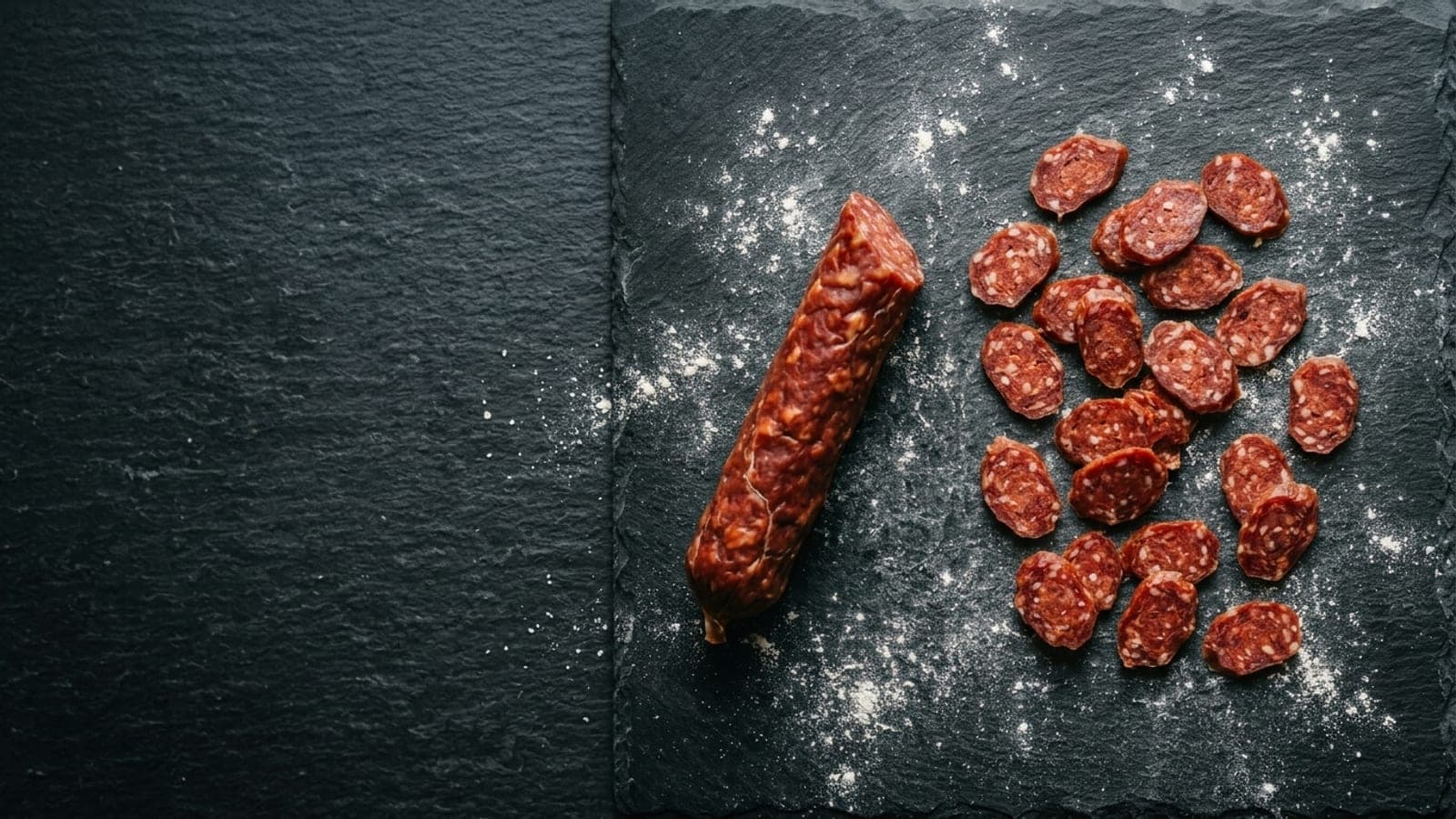
Pepperoni on pizza — the topping
America's favorite topping is a precision instrument in a deli costume: the right pepperoni bakes into crisp little cups holding pools of paprika oil, and the wrong one lies flat and sweats politely. The difference isn't your oven or your technique — it's what you bought.
This page is the buying call, the cupping physics and the layering, with the dose read from the same registry the pepperoni pie scales to your ball.
What to buy
The cupping kind says natural casing on the label: the collagen casing tightens in the heat faster than the meat shrinks, so each slice pulls itself into a bowl and the rim chars. The recipe note says it plainly — the natural-casing kind cups best. Buy a whole stick when you can and slice it thin yourself; thin slices cup, thick ones just bend.
The wide pre-sliced supermarket kind is skinned before slicing, so it bakes flat — still good paprika flavor, no drama. If flat is what's in the fridge, the pizza is still worth making; it's a different pie, not a worse cook.
Working with it
Pepperoni goes on top of the cheese, never under it — the layering order on the recipe page is the assembly order. Cupping needs direct top heat; slices buried under mozzarella poach in whey and arrive pale and limp.
The orange oil pooling in the cups is the point, not a defect — it's paprika fat doing the seasoning. The dose is calibrated so it perfumes instead of floods; doubling the pepperoni is the fastest route from a slice to an oil slick, which is why the recipe weighs it.
On the pizzas
The classics that use it, with the amount each takes at its default size — the same numbers their recipe pages scale to your dough:
| Pizza | Per pizza | When |
|---|---|---|
| Pepperoni | 55 g | before the bake |
Questions from the counter
Pepperoni and salame piccante — same thing?
Cousins, not twins. Pepperoni is the American descendant: paprika-forward, finer grind, sliced small and prone to cupping. Salame piccante is the Italian original — coarser, chili-forward, baked flat in wide slices on the diavola, which weighs it on its own page. Swapping them works; the pizza just changes its accent.
Why doesn't my pepperoni cup?
Three suspects, in order: no natural casing (skinned slices can't cup, whatever you do), slices cut too thick (anything past about a coin's thickness bends instead of bowls), and burial under the cheese, where no top heat reaches it. Fix the shopping first — technique can't rescue the wrong sausage.
Should I blot the grease?
On a properly dosed pie, no — the oil in the cups is seasoning, and dabbing it off un-seasons the slice. If your pizza is genuinely flooding, the dose crept up or the slices went on in drifts; scatter them with daylight between, and let the recipe's number argue with your enthusiasm.
Put it on a pizza
The dough is the calculator’s job and the doses are scaled on the recipe pages — this one is ready for the classic below.
The clock is a suggestion. The dough is the boss. In bocca al lupo!