Brick cheese on pizza — the topping
Brick cheese is the most asked-about ingredient on this site that almost nobody outside the American Midwest has ever met: a Wisconsin original, buttery and high-fat, that exists on this site for exactly one reason — it's what fries into the burnished, lacy frico edge that makes a Detroit pizza a Detroit pizza.
This page is what it is, what to do when you can't get it, and the dose — a number with more digits than most, from the registry the red top page scales to your pan.
What to buy
You want young brick — mild, springy, pale butter-yellow — which is how it's sold for pizza. (Aged brick is a different beast entirely, a pungent washed-rind relative that will introduce itself to the whole refrigerator; admire it, don't pizza it.) In the US it ships from Wisconsin cheesemakers; elsewhere it's a mail-order trophy or a substitution job.
The substitute that gets convincingly close: half low-moisture mozzarella, half a mild young white cheddar, cubed together. Brick's trick is butterfat, and that blend rebuilds it — the mozzarella brings the melt and stretch, the cheddar brings the fat and tang that fry into a proper edge.
Working with it
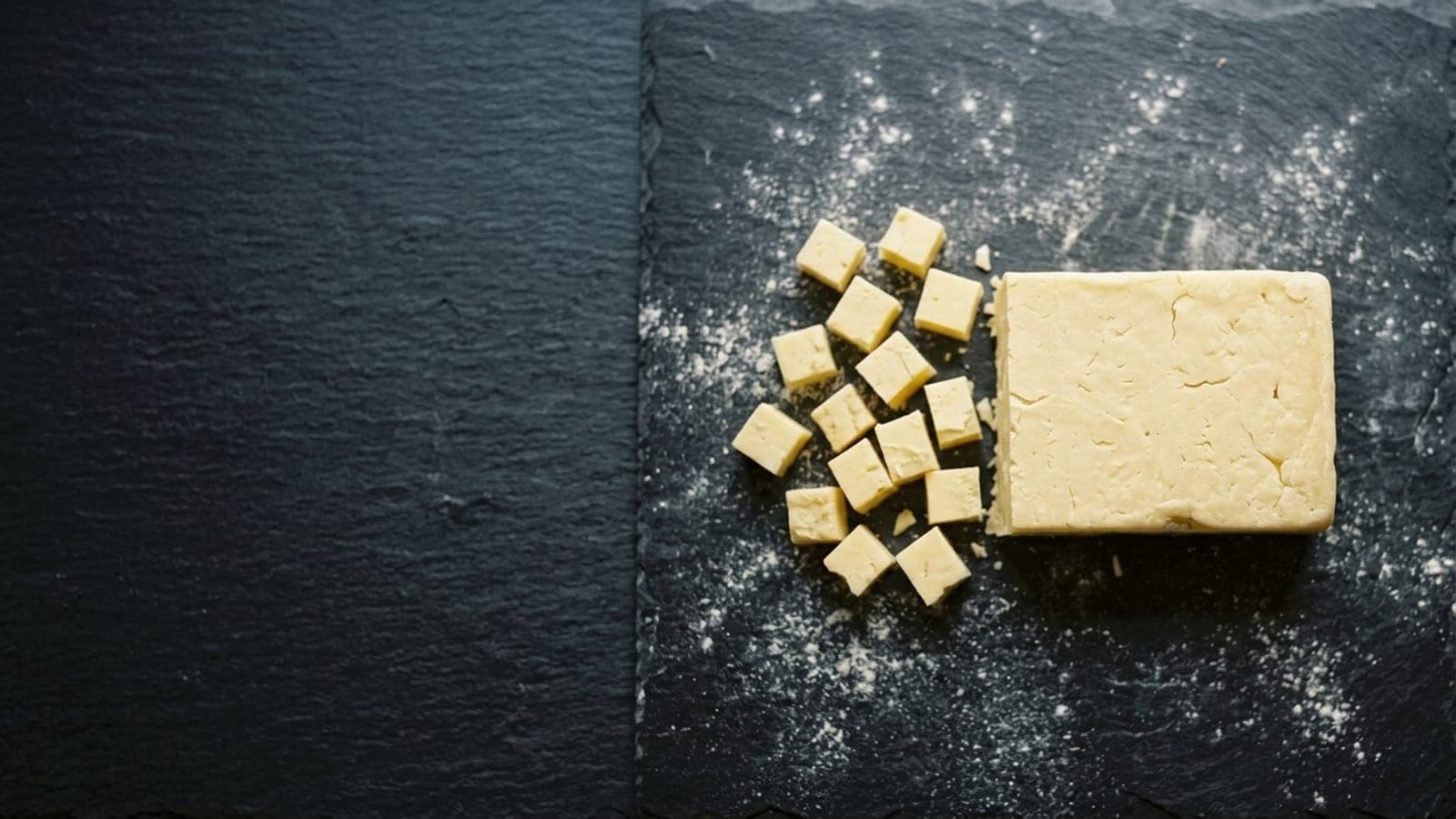
The red top's note is the technique: cubed small, scattered edge to edge — cheese against bare steel is where the frico happens. Cubes, never shreds: a cube releases its fat slowly enough to fry golden against the pan wall, where shreds flash-burn into bitterness before the crumb is done.
Edge to edge means it: the cubes must touch the pan walls with no dough rim in the way, because the caramelized cheese perimeter is the crust of a Detroit pizza. The sauce ladders on top after — stripes over the cheese, never under it.
On the pizzas
The classics that use it, with the amount each takes at its default size — the same numbers their recipe pages scale to your dough:
| Pizza | Per pizza | When |
|---|---|---|
| Detroit red-top | 250 g | before the bake |
Questions from the counter
I can't find brick cheese — what's the substitute?
Half low-moisture mozzarella, half a mild young white cheddar, cubed together — the same answer the red top page gives, because they read the same registry of opinions. The cheddar carries brick's butterfat and gentle tang, the mozzarella carries the melt. All mozzarella works too; the edge just turns out a little politer.
What does brick cheese actually taste like?
Young brick — the pizza one — is mild, milky and buttery with a whisper of tang, closer to a softer Monterey Jack than to anything sharp. The flavor isn't really the point; the butterfat is. It's engineered by history to melt rich and fry crisp, which is precisely the job description of a Detroit edge.
Why cubes instead of shreds?
Frico physics. A small cube against hot bare steel renders its fat gradually, frying itself golden over the whole bake; shreds have so much surface area they scorch in the first minutes and turn acrid. Cube it small, scatter generously to the walls, and let the pan do the cooking — the lacy edge is the reward for not shredding.
Put it on a pizza
The dough is the calculator’s job and the doses are scaled on the recipe pages — this one is ready for the classic below.
The clock is a suggestion. The dough is the boss. In bocca al lupo!