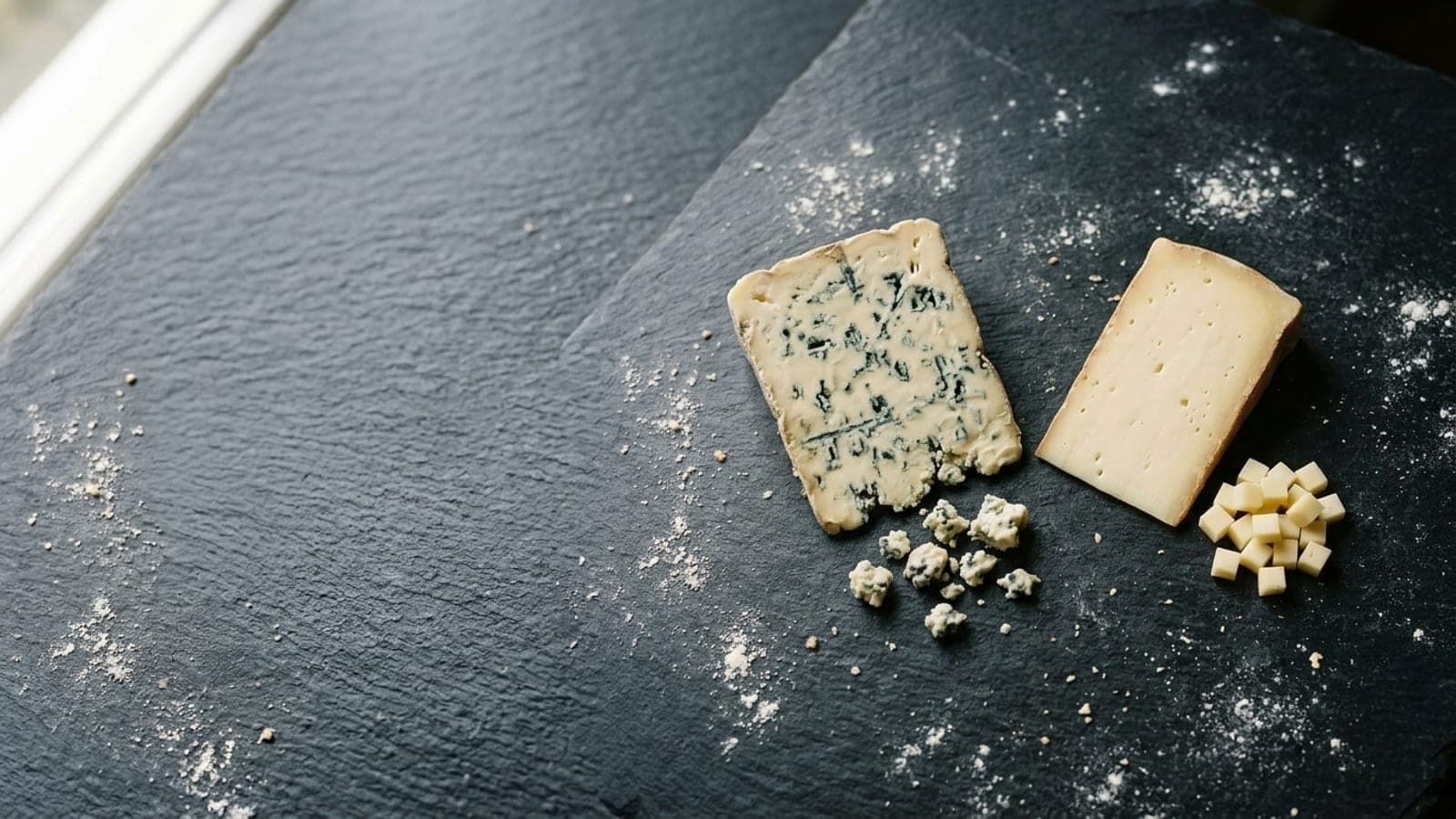
Gorgonzola & fontina on pizza — the topping
On the quattro formaggi, the fior di latte does the volume and the parmigiano does the seasoning — these two do the character. Gorgonzola is the blue voice, landing in little pockets of sweet-sharp cream; fontina is the alpine diplomat, nutty and earnest, melting everything around it into agreement.
This page is what to buy of each and how they go on, with the doses read from the same registry the quattro formaggi page scales.
What to buy
Gorgonzola comes in two temperaments: dolce — soft, creamy, sweetly sharp — and piccante, firmer and louder. Dolce is the pizza one; it melts into glossy blue pools where piccante stays chalky and shouts. Buy a wedge cut fresh from the foil-wrapped wheel, creamy at the center, and ignore the crumbles in tubs.
Fontina's real name is Fontina Valle d'Aosta — rind-stamped, nutty, faintly mushroomy, one of the world's great melting cheeses. The pale Scandinavian-style 'fontina' in supermarket cases is its mild-mannered tribute act: it melts honestly and offends no one. Either works; the Aosta wedge brings the perfume.
Working with it
Each gets its own geometry, straight from the recipe: the gorgonzola goes on in small nuggets — thumbnail pockets pressed from the wedge, never spread — so it lands as punctuation rather than a wash that annexes the whole pizza. The fontina is diced small so it melts in time: it's firmer than the fior di latte it bakes beside, and bigger pieces arrive at the table half-melted and sulking.
Scatter them alternately so every slice catches both voices, and keep them clear of the rim — gorgonzola that touches bare crust scorches into bitterness before the rest of the pizza notices. The doses are the quattro formaggi page's department.
On the pizzas
The classics that use it, with the amount each takes at its default size — the same numbers their recipe pages scale to your dough:
| Pizza | As | Per pizza | When |
|---|---|---|---|
| Quattro formaggi | Gorgonzola | 30 g | before the bake |
| Quattro formaggi | Fontina | 25 g | before the bake |
Questions from the counter
Dolce or piccante gorgonzola?
Dolce, unless the table has voted for a fight. It melts creamy, keeps its sweetness next to the salt, and plays in ensemble — which on a four-cheese pizza is the job description. Piccante is wonderful on a cheese board and legal on a pizza, but it elbows the other three cheeses and asks for a lighter hand than any recipe will admit to.
What substitutes for the fontina?
Taleggio if you want it louder and a little funkier, young provolone if you want it quieter, gruyère if you accept a Swiss accent. What you're shopping for is a disciplined melter with an opinion — a cheese that flows by the end of the bake without flooding, and tastes of something once it gets there.
Is gorgonzola just Italian blue cheese?
It's Italy's protected blue, and the gentlest of the great ones — creamier and sweeter than Roquefort or Stilton, both of which bake saltier and harsher than you hope. On a pizza that mildness is the feature: you want blue weather moving through the cheese, not a storm that cancels the other three.
Put it on a pizza
The dough is the calculator’s job and the doses are scaled on the recipe pages — this one is ready for any of the classics above.
The clock is a suggestion. The dough is the boss. In bocca al lupo!