Caciocavallo on pizza — the topping
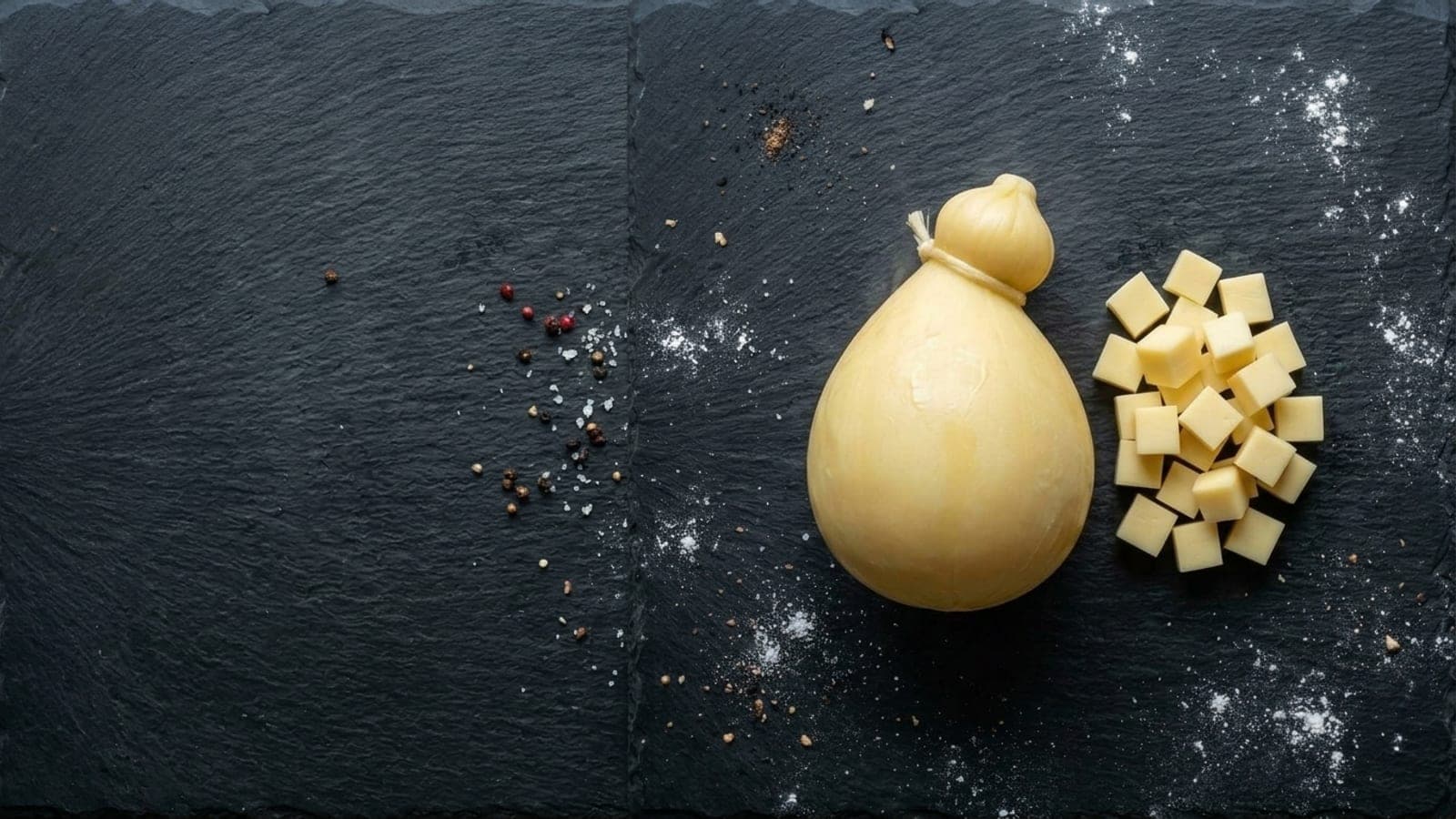
Caciocavallo is the cheese the sfincione is built around and the one most people have never knowingly eaten: a southern Italian stretched-curd cheese, tied in pairs and hung to age “a cavallo” — astride — a beam, which is where the name and the gourd shape come from. Picture provolone's older, firmer, more characterful cousin.
One classic here puts it to work — the sfincione — weighed per pizza. This page is what it actually is, what to buy when the deli fails you, and the dose from the same registry the recipe page scales.
What to buy
Caciocavallo is pasta filata — the same stretched-curd family as mozzarella and provolone — pressed into its gourd shape and aged from a few weeks (semi-soft, mild) to many months (hard, sharp, almost piquant). For pizza you want the younger, melting end: semi-stagionato, firm enough to cube but still meltable. Southern Italian delis and good cheese counters carry it; look for the teardrop with a string mark at the neck.
Can't find it? Young (dolce) provolone is the closest easy swap — same family, similar tang, melts much the same. A mild white cheddar reaches the flavor if not the stretch. And Palermo itself often uses tuma or primo sale — fresh, milky, unaged cheeses — on this very pizza, so a fresh white cheese is a traditional substitute, not a compromise.
Working with it
On the sfincione the cheese goes down first, not on top: the note is cubed small, pressed into the dimpled dough before anything else, so the cubes melt up through the spongy crumb and anchor the onion-tomato sauce that lands over them. Cube it small — big chunks leave molten pockets and bald patches between — and press them into the dimples your fingers leave in the dough.
Don't shred it like mozzarella: caciocavallo is firmer and oilier, and shreds clump and seize. Small cubes melt evenly and keep a little chew, the texture the sfincione wants under all that soft bread and sweet onion. Using young provolone or fresh tuma instead? Cube it the same way and treat it identically — the method is about the pizza, not the specific cheese.
On the pizzas
The classics that use it, with the amount each takes at its default size — the same numbers their recipe pages scale to your dough:
| Pizza | Per pizza | When |
|---|---|---|
| Sfincione | 120 g | before the bake |
Questions from the counter
What does caciocavallo taste like?
Like provolone with more to say: milky and mellow when young, sharpening to a firm, tangy, faintly piquant cheese as it ages. The name means “cheese on horseback” — for the way the pairs are tied and hung astride a beam, no horse involved (a question it gets more than you'd think). On the sfincione it brings the savory backbone the soft crumb and sweet onions lean on.
What can I substitute for caciocavallo?
Young provolone is the closest — same stretched-curd family, similar tang, melts much the same way. Mild white cheddar approximates the flavor if not the stretch. And the most traditional swap is the one Palermo already reaches for: fresh tuma or primo sale, milky and unaged. Skip low-moisture mozzarella here — it melts too blandly to stand up to the breadcrumbs and onions.
Can I use caciocavallo on other pizzas?
Gladly — it melts like a sharper provolone, so it's at home wherever you'd want a firmer, tangier cheese: a quattro formaggi swap, the base of a Calabrian or Pugliese pie, or smoked (affumicato) for a deeper note. Cube it small whatever the pizza, and remember it's saltier and oilier than mozzarella, so a lighter hand goes a long way.
Put it on a pizza
The dough is the calculator’s job and the doses are scaled on the recipe pages — this one is ready for the classic below.
The clock is a suggestion. The dough is the boss. In bocca al lupo!