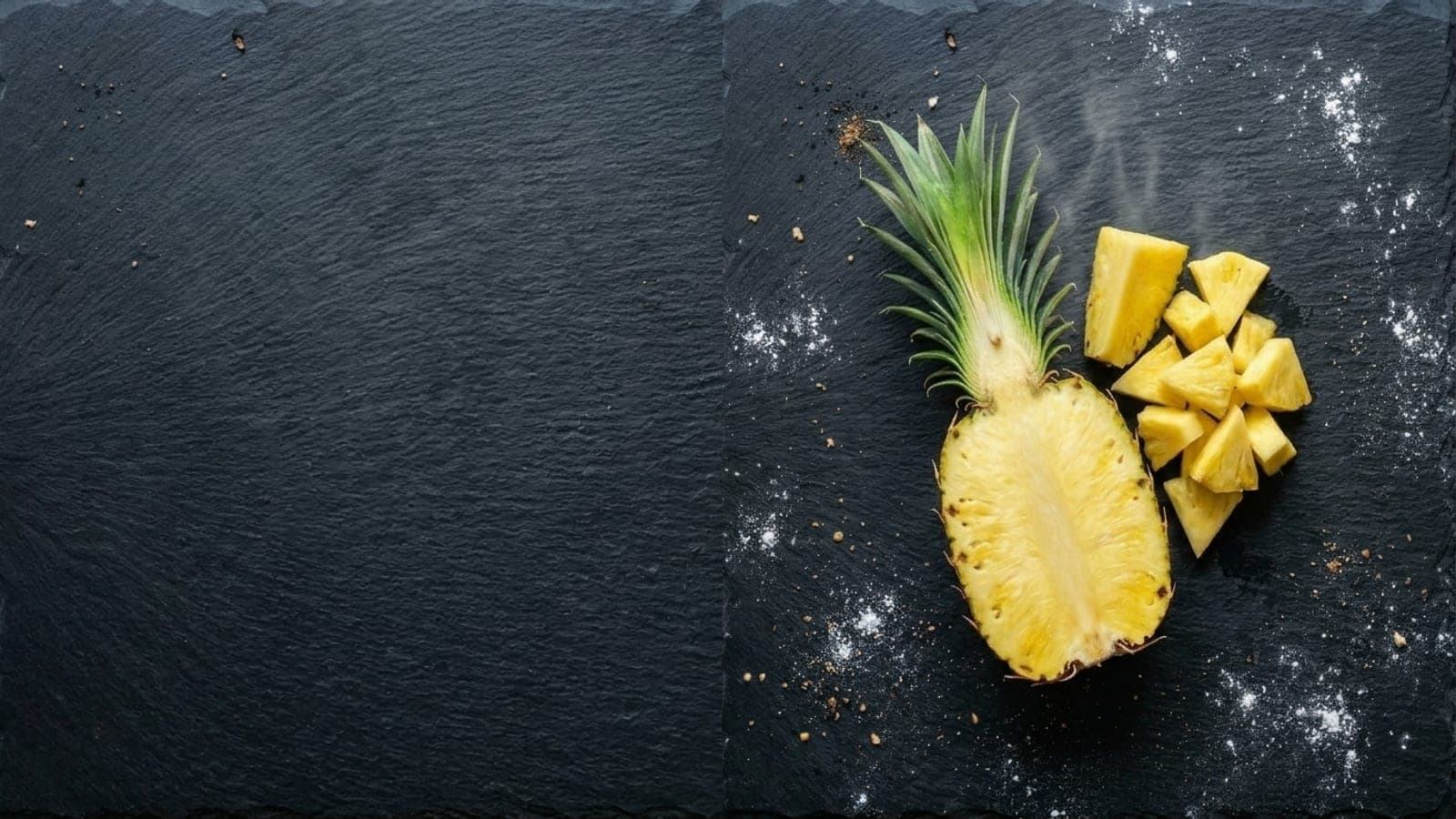
Pineapple on pizza — the topping
No topping divides a table faster: pineapple on pizza is either a crime or the best slice of the night, and the camps don't negotiate. What nobody argues about is the failure mode — a sweet, soggy puddle where the cheese should be — and that's a draining problem, not a moral one.
One classic here carries it, the Hawaiian, weighed per pizza. This page is the fresh-vs-canned call, the drain-it-hard discipline and the dose — read from the same registry the recipe page scales, so the sweetness stays in proportion.
What to buy
Canned pineapple is the honest, traditional Hawaiian topping and the easy call: buy tidbits or chunks in juice, not syrup — syrup-packed fruit is candied to the point of scorching black in the oven. Tidbits scatter best; rings look retro but cut into wet, awkward wedges.
Fresh pineapple is the upgrade if you'll do the work: a ripe one — sweet at the base, an inner leaf that tugs free — cut into small pieces tastes brighter and browns into something almost roasted. It weeps a little less than canned, but it never goes on dry without help.
Working with it
Water is the whole battle, and the recipe note is the order — tidbits, drained hard and patted dry. Tip the pieces into a sieve, press them with the back of a spoon until the juice stops running, then spread them on a towel and blot the surface. A wet pineapple spends the bake leaking sugar-water under the cheese; a dried one caramelizes instead.
Scatter it over the cheese, never buried under it, so the top heat colors the edges and drives off what moisture is left. Lay the pieces among the ham with daylight between them — pineapple in drifts steams itself, while pieces with room roast. The dose is set so the sweetness lands as a counterpoint, not a dessert; doubling it is the short road back to the puddle.
On the pizzas
The classics that use it, with the amount each takes at its default size — the same numbers their recipe pages scale to your dough:
| Pizza | Per pizza | When |
|---|---|---|
| Hawaiian | 55 g | before the bake |
Questions from the counter
How do I stop Hawaiian pizza going soggy?
Drain the pineapple like you mean it: sieve, press, pat dry, every time. The fruit is most of the water on the pie, and a wet scatter floods the cheese before the crust can set. Use tidbits over rings (less trapped juice), keep to the weighed dose, and give the pieces space so the oven roasts them instead of steaming them.
Fresh or canned pineapple?
Canned is traditional, consistent and completely legitimate — buy it in juice, never syrup. Fresh is brighter and browns better if you've got a ripe one and a few minutes to cut it small. Either way the draining rule is identical; fresh just rewards you with a little less water and a little more perfume.
Is pineapple on pizza actually Italian?
Not remotely — it's a Canadian invention from 1962, named after the canned-fruit brand, and proudly North American. That's why the Hawaiian rides a New York base here, not a Neapolitan one. Lean into the sweet-salt-heat with the ham — a chili-oil or hot-honey finish is the modern move — and let the purists keep the marinara.
Put it on a pizza
The dough is the calculator’s job and the doses are scaled on the recipe pages — this one is ready for the classic below.
The clock is a suggestion. The dough is the boss. In bocca al lupo!