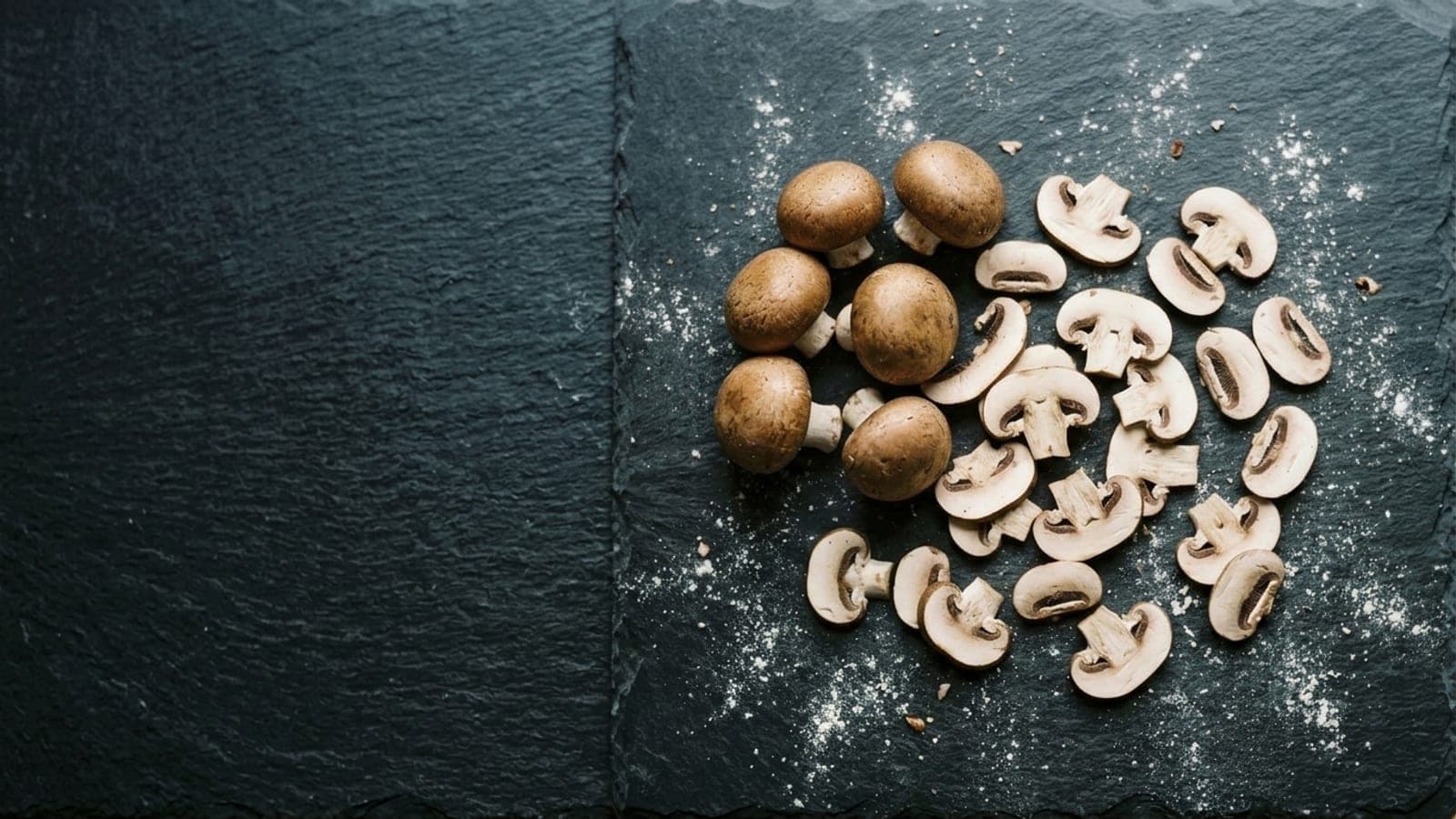
Mushrooms on pizza — the topping
Ask about mushrooms on pizza and you'll collect two warring certainties: raw, says the Italian tradition; sautéed first, says everyone who ever ate a watery slice. Both are right — they're just talking about different thicknesses.
Four classics here carry mushrooms, every dose weighed. This page is the raw-or-cooked verdict, the buying, and the numbers from the registry the recipe pages scale.
What to buy
White button and cremini (chestnut) mushrooms are the pizza workhorses — cremini brings a little more of the woods for the same money. Buy firm, dry, closed caps and skip the pre-sliced tubs, whose cut edges have been drying out since the factory.
Wild and fancy mushrooms — porcini, oyster, whatever the market is proud of — are a legitimate upgrade with one tax attached: most carry more water or more toughness than the bake can handle raw, so they want a hard, fast sauté first.
Working with it
The recipes' call is the traditional one — sliced thin; raw is traditional, as the recipe pages stamp it. Thin is the entire trick: paper-thin slices dehydrate in the bake and concentrate into something almost roasted, while thick slabs stew and leak. Slice just before topping, and don't salt them on the cutting board — salt pulls the water out early.
Wipe, don't wash: mushrooms are sponges with ambitions, and a soak comes back out on your pizza. If you'd rather sauté — thick slices, wet varieties, or just a taste for browned edges — cook them hard and fast in a dry-ish pan first, then scatter them lighter than the raw dose; they've already lost their water weight.
On the pizzas
The classics that use it, with the amount each takes at its default size — the same numbers their recipe pages scale to your dough:
| Pizza | Per pizza | When |
|---|---|---|
| Prosciutto e funghi | 50 g | before the bake |
| Capricciosa | 40 g | before the bake |
| Quattro stagioni | 25 g | before the bake |
| Boscaiola | 50 g | before the bake |
Questions from the counter
Raw or sautéed — settle it.
Raw and paper-thin is the Italian default and what the recipe doses assume — the bake itself does the cooking. Sauté first when the slices are thick, the variety is wet (oyster, fresh porcini) or you want browned depth on a fast bake. Either way the slicing does more for the result than the pan does.
Are canned mushrooms acceptable?
They're a fixture of a certain honest pizzeria style, and nobody should be ashamed of a funghi made from the pantry. But they arrive pre-boiled, so the bake can't roast them — drain and pat them hard, expect tender rather than savory-crisp, and know that five minutes with a fresh cremini and a sharp knife beats the can every time.
Which mushrooms belong on the boscaiola?
The woodsman's pizza wants the woodsiest you can defend: porcini if the season smiles, cremini honestly the rest of the year. Slice the cremini thin and raw per the recipe; fresh porcini are wetter and prouder, so give them the fast sauté and a lighter hand.
Put it on a pizza
The dough is the calculator’s job and the doses are scaled on the recipe pages — this one is ready for any of the classics above.
The clock is a suggestion. The dough is the boss. In bocca al lupo!