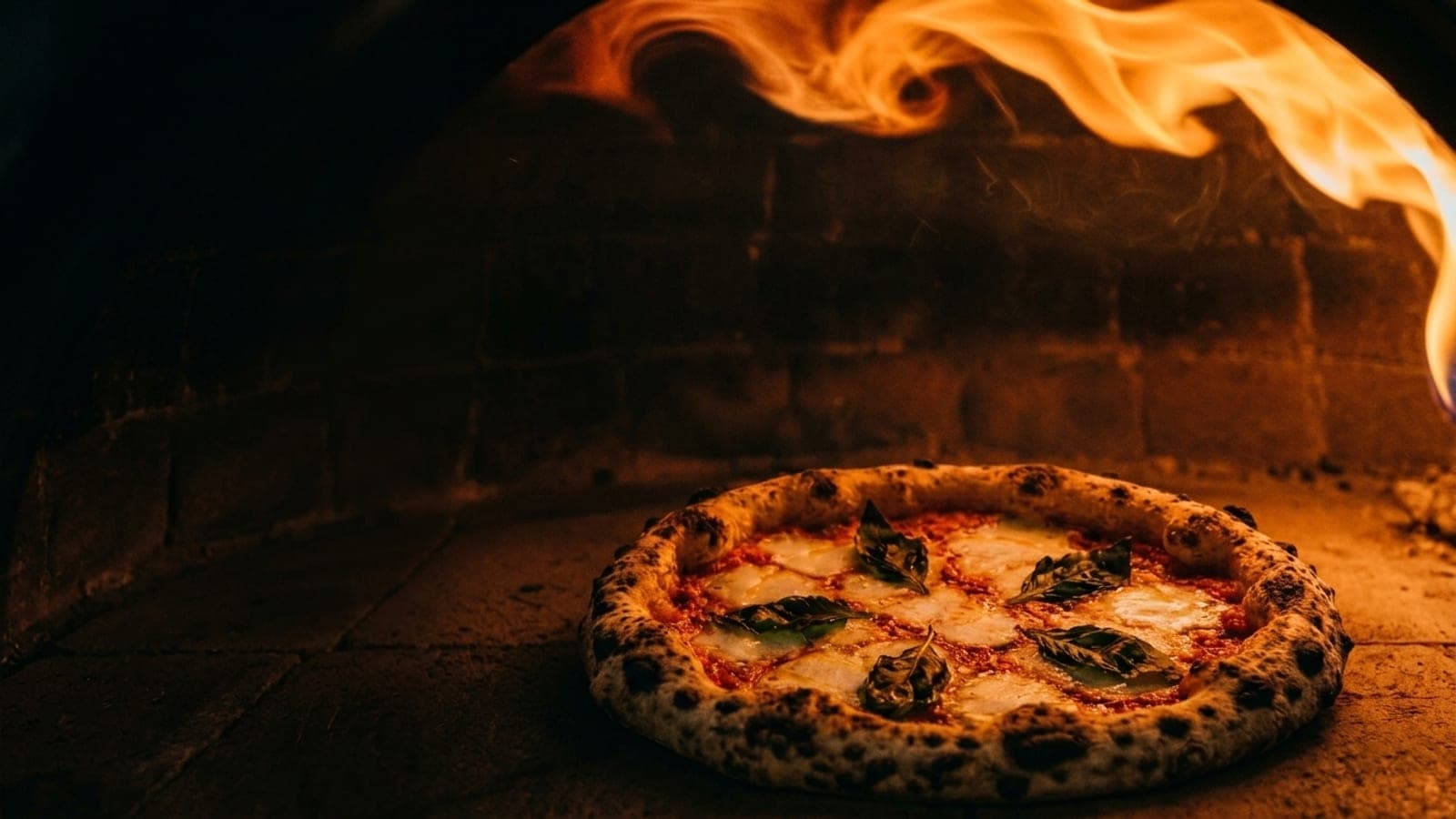
Outdoor pizza ovens — the guide
A home oven’s whole struggle is faking heat it doesn’t have. An outdoor oven — an Ooni, a Gozney, a wood-fired dome — flips the problem on its head: now you have more heat than most pizzas want, and the whole craft is aiming it.
This guide is the same per-style numbers the calculator prints under every recipe — what each style actually wants (up to 450 °C / 842 °F for Neapolitan), which pizzas live fire was built for, and how to ride a flame that runs hotter than any kitchen.
How hot? Hottest first
Read this one top-down. An outdoor oven’s resting state is an inferno, so the styles at the top — the leopard-spotted rounds — are the reason these ovens exist; the gentler rounds below want the flame turned down to meet them.
| Style | °C / °F | Bake |
|---|---|---|
| Neapolitan | 450 / 842 | ~2 min |
| Thin & crispy | 300 / 572 | ~5 min |
| Pinsa | 300 / 572 | ~8 min |
| New York | 290 / 554 | ~7 min |
| Tavern | 290 / 554 | ~9 min |
These are the open-floor, live-fire styles. The 5 pan styles — teglia, Sicilian, Detroit, grandma and focaccia — are home-oven pizzas, baked in a dark pan at gentler heat; they’re happiest in the kitchen, not under a flame.
Ooni, Gozney, gas or wood
Two names own the backyard — Ooni and Gozney — and the rivalry has been good for everyone who eats pizza. But the choice that matters more than the badge is the fuel.
Gas is the repeatable one: a dial, a steady flame, the same result Tuesday and Saturday. It’s the easiest way to hold a target temperature — which, as the table shows, is most of the battle for everything below Neapolitan. Start here.
Wood or charcoal buys two things gas can’t: a higher ceiling and real live-fire flavor. They also ask to be tended — fed, read, waited on — so budget attention, not just minutes. Most ovens run to around 500 °C and take 15–20 minutes to get there; many take a gas burner and a wood tray, so you can graduate to fire once the dough is dialled in.
Riding the flame
The live-fire rounds span 290–450 °C — one oven asked to do two opposite jobs. Neapolitan at the top wants everything you’ve got; the 290 °C rounds want the flame well down. Learning to move between them is the entire skill.
Up, for Neapolitan: saturate the floor with a full preheat, keep the flame rolling across the dome, and turn the pizza every 20–30 seconds with a turning peel. It’s a ~2-minute bake where one unturned second is a black crescent — but it’s the one pizza a home oven can’t make, and the reason most people buy the oven.
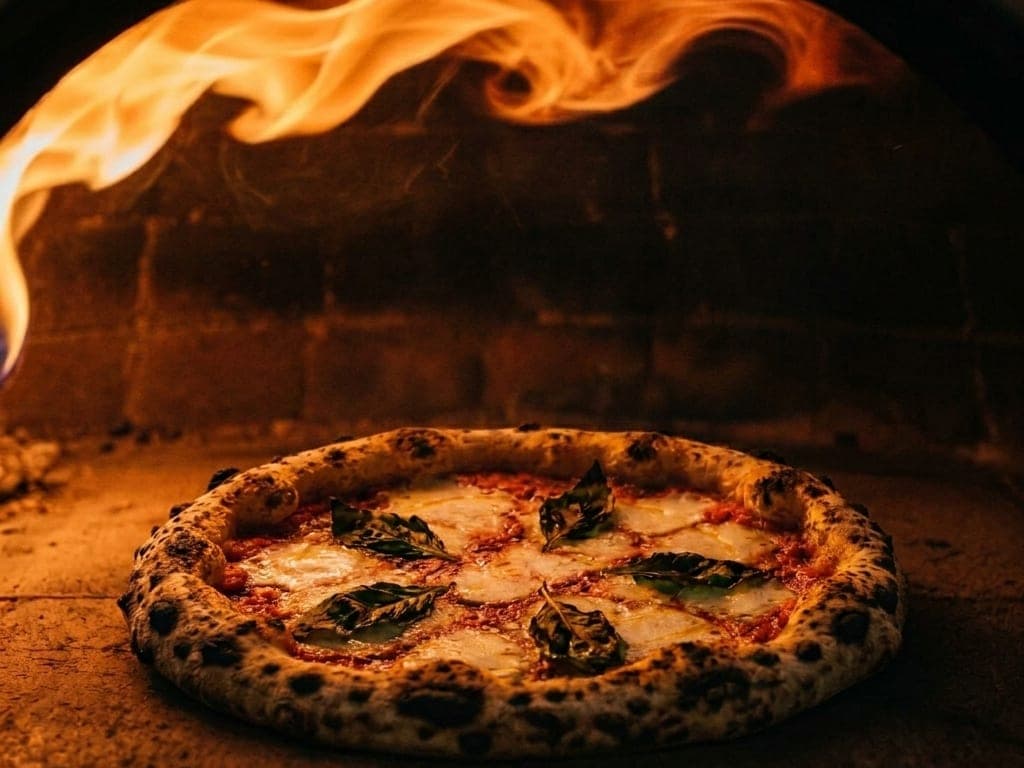
Down, for the rest: once the floor is hot, turn the flame low (or off) and bake longer and gentler, or the base scorches black before the cheese has melted — the live-fire version of the burnt-bottom problem. When in doubt: launch, then drop the flame.
Launch, turn, recover
Build on a peel dusted with flour or semolina, work fast, and commit — a screaming floor is unforgiving of a pizza that hesitates. If it glues itself down, the stuck-to-the-peel fix has the rescue moves.
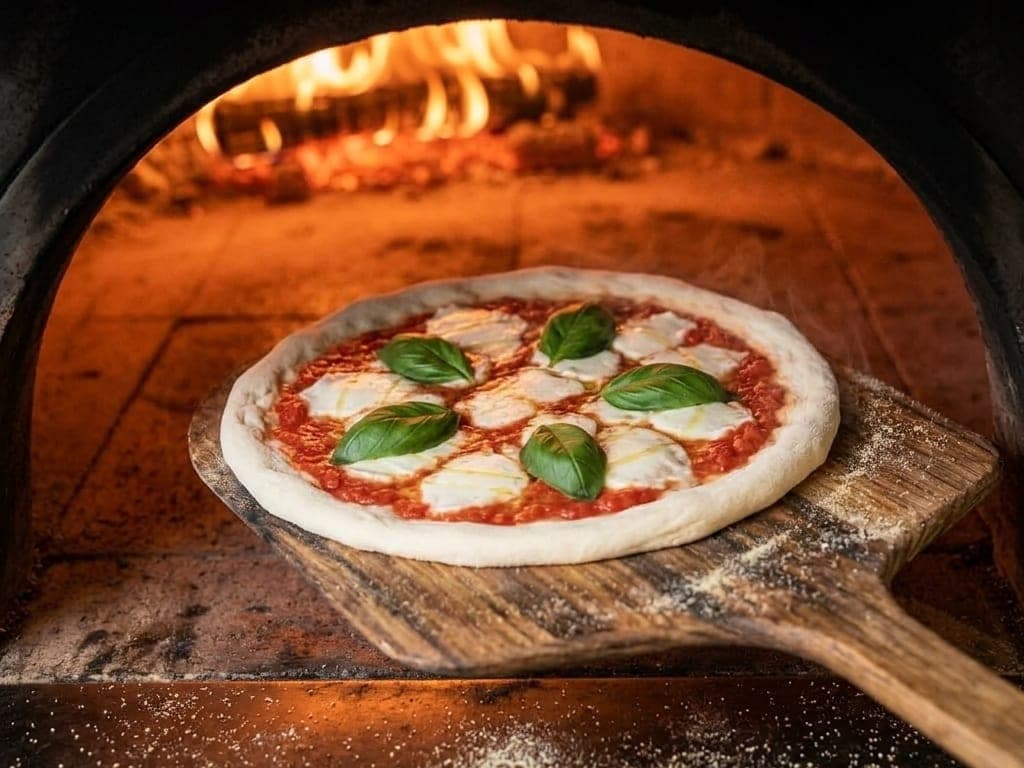
Every pizza steals heat from the floor. Between launches, let the flame bring it back — the second pizza lands on a colder stone than the first, and a stack of pale bases is just an impatient cook. A good oven recovers in a few minutes; spend them stretching the next ball.
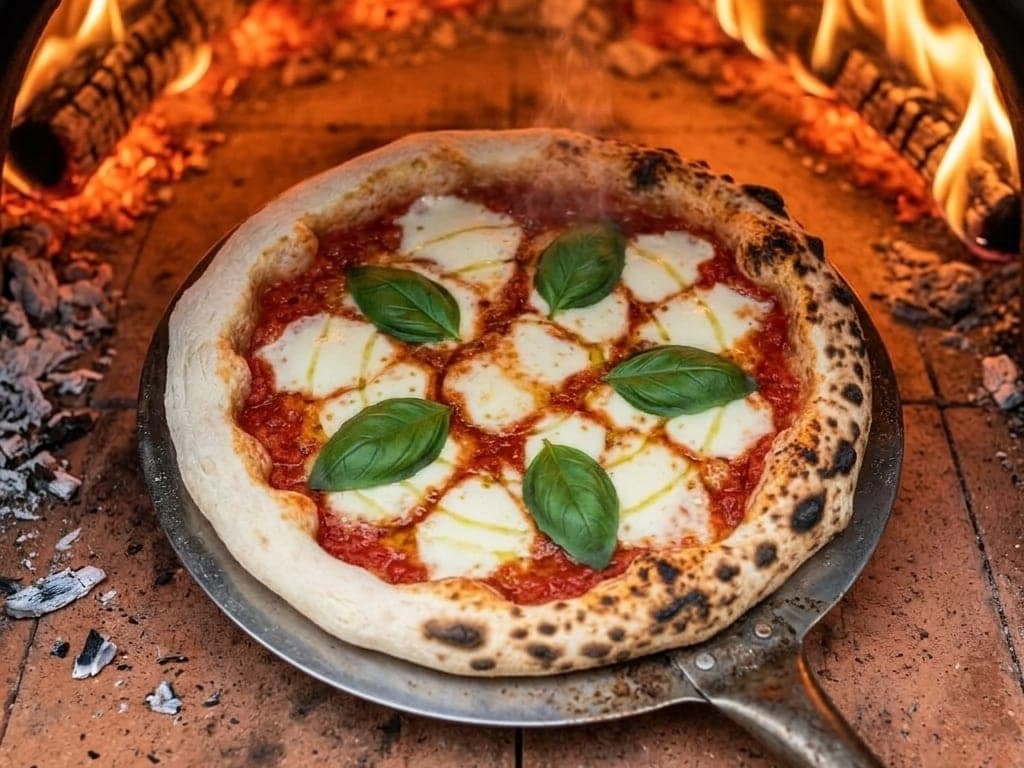
And mind the dough: a fast, fierce bake rewards a well-fermented, well-opened ball and exposes a tight or under-proofed one — there’s no slow bake to hide behind. The calculator’s schedule and the stretching guide matter more here, not less.
Questions from the yard
What temperature for Neapolitan in an Ooni or Gozney?
450 °C (842 °F) at the floor, the flame rolling, about 2 minutes turning almost constantly. It’s the one bake a domestic oven can’t reach — see the oven guide for how close a steel and the broiler get you indoors.
Do I actually need an outdoor oven?
Only for true Neapolitan. The other 9 styles bake beautifully in a kitchen — 7 of 10 at or under the home oven’s 290 °C ceiling — so an outdoor oven is a joy, not a gate. The oven guide is the indoor route for everything else.
Can I make New York or pan pizza in it?
The rounds — New York, tavern, thin & crispy, pinsa — yes: bring the flame down to their target and bake them longer than Naples. The 5 pan styles (Detroit, Sicilian, grandma, teglia, focaccia) you can set inside on a low flame, but they were built for a domestic oven and a dark pan — that’s where they shine.
Gas or wood?
Gas for repeatable temperature control, which is most of the skill below Neapolitan. Wood or charcoal for a higher ceiling and live-fire flavor, at the cost of tending the fire. Many ovens take both — start on gas, graduate to wood.
Light it up
Every recipe the calculator writes ends with its target temperature — the number to dial your flame to. Pick a style, then bring the oven to meet it.
The clock is a suggestion. The dough is the boss. In bocca al lupo!