Kneading pizza dough — the guide
Kneading is the most over-respected step in pizza. It isn’t magic and it isn’t a workout — it’s just one of three ways to line up gluten, and the other two are a folding motion you can do in thirty seconds and plain, patient time. Every recipe this site writes already chooses among them for you.
Here’s what kneading actually develops, how long it honestly takes by hand or mixer, why the calculator switches to stretch-and-folds at 72% hydration, and how far “no-knead” can really go.
What kneading actually does
Flour plus water makes gluten on contact — a tangled, random net. Kneading doesn’t create it; kneading organizes it, stretching and re-stacking the strands until the tangle becomes a fabric. Organized gluten is what holds gas in the ferment and lets a ball open into a round without tearing.
The method the calculator prints starts the work for you: mix to no dry spots, then rest 20 minutes — the autolyse. In that pause gluten forms and hydrates on its own, which is why the kneading that follows is minutes, not the half hour your grandmother swore by. Then it’s 8–10 minutes of heel-press, roll, quarter turn, repeat — until smooth and elastic.
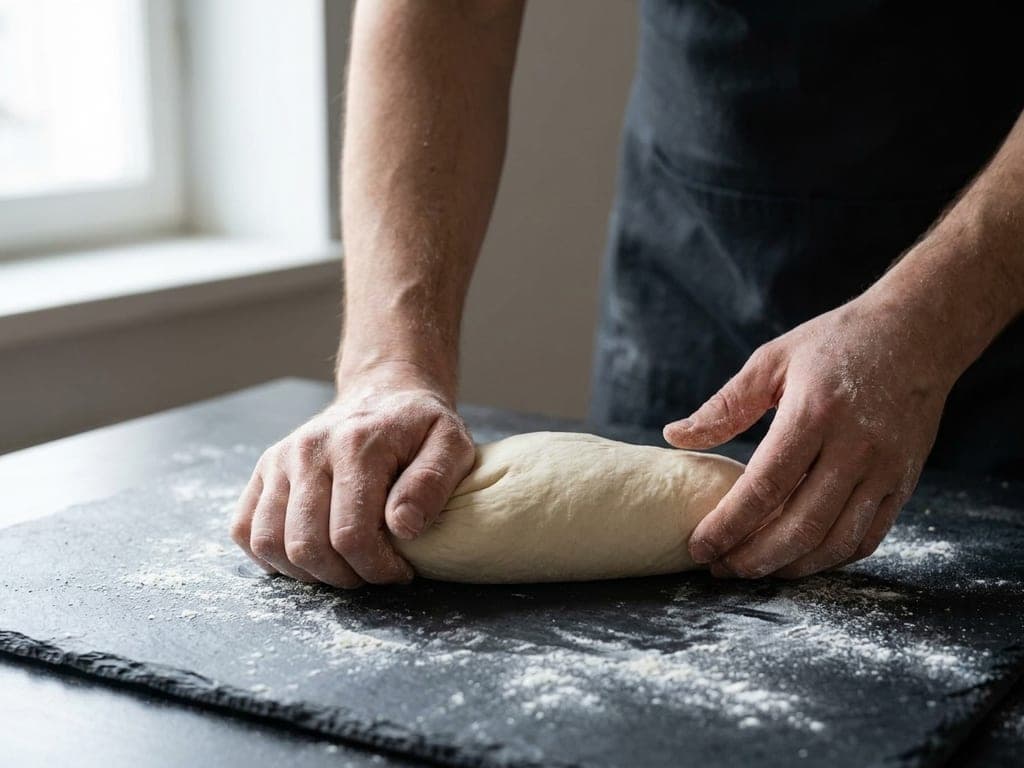
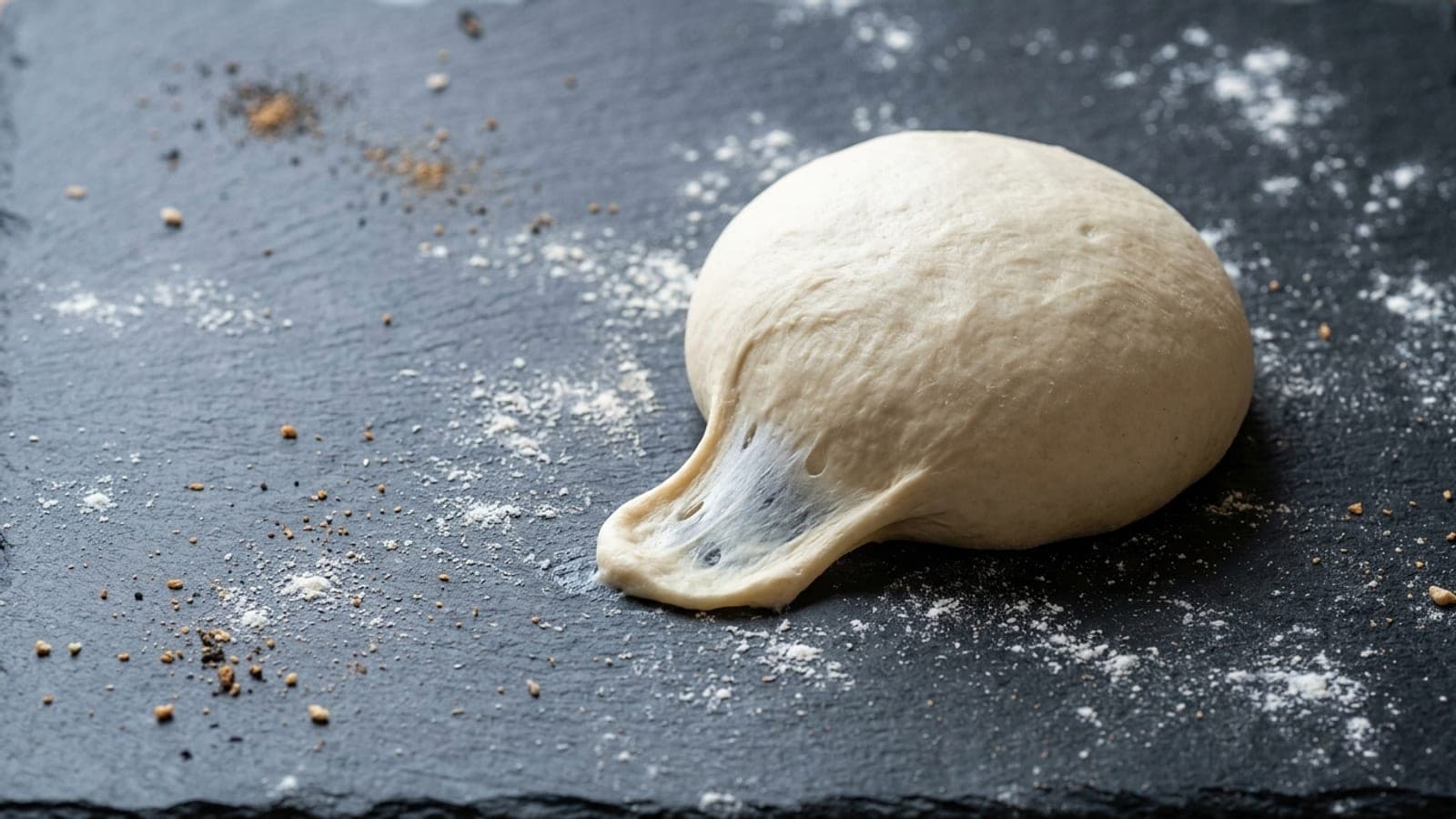
Done means: the surface turns smooth and slightly tight, a poked dimple springs back, and a pinched-off knob stretches into the translucent windowpane the stretching guide uses as its readiness test. In a stand mixer, the same dough takes about the same time on low — the mixer spares your arms, not the clock.
The 72% switch
Kneading needs a dough firm enough to push against. From 72% hydration upward there’s no such dough — there’s a glossy, sticky pillow that swallows your hands — so the calculator’s method quietly swaps the instruction: 3 sets of stretch-and-folds, 20 minutes apart, instead of heavy kneading.
| Style | Hydration | Method |
|---|---|---|
| Tavern | 52% | Knead |
| Thin & crispy | 56% | Knead |
| Neapolitan | 62% | Knead |
| New York | 63% | Knead |
| Grandma | 65% | Knead |
| Sicilian | 70% | Knead |
| Detroit | 70% | Knead |
| Roman teglia | 78% | Folds |
| Focaccia | 80% | Folds |
| Pinsa | 80% | Folds |
The pattern is no accident: the 7 kneadable doughs are the rounds and the firmer pans; the fold club is the wet trio — roman teglia, focaccia and pinsa. Why wet doughs get away with less work is the hydration guide’s story: more water, more mobility, gluten that organizes itself.
The fold, in one motion
With wet hands, grab the far edge of the dough, lift until it stretches taut without tearing, and lay it over the middle like closing a letter. Turn the container a quarter and repeat — four grabs make one set. It costs thirty seconds, and you’ll feel the dough tighten under your fingers by the third grab.
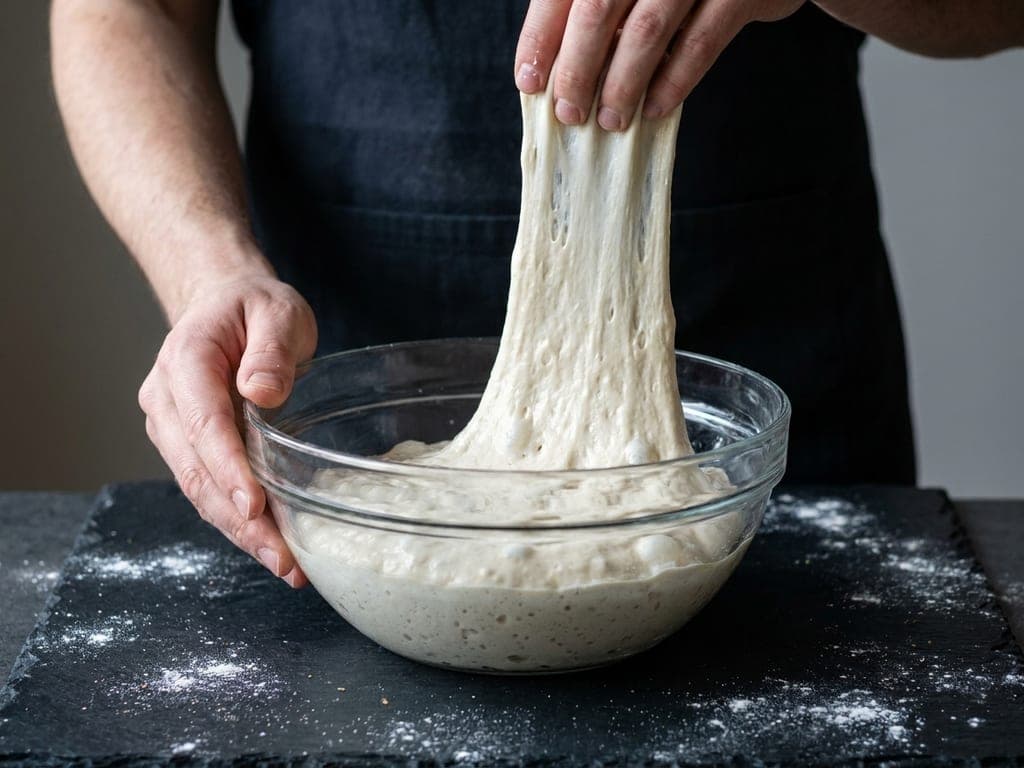
Then walk away for 20 minutes and do it again, three sets in all — the method card on every wet-style recipe counts them out. Between sets, time is doing the kneading; the folds just stack the layers so it works faster. Wet hands beat flour every time: the too-sticky fix explains why reaching for the flour bag backfires.
No-knead, honestly
Here’s the quiet truth behind every viral no-knead recipe: gluten organizes itself if you give it long enough, because fermentation gases stretch the net from inside while enzymes loosen it. Twelve slow hours do most of what ten minutes of kneading would — which is why long-fermented dough handles like silk even when the mixing was lazy.
So yes: mix any of the firmer doughs to no dry spots, skip the kneading entirely, and plan a long, slow rise — add a fold or two in the first hour if you remember. The crumb will be a touch more rustic and the first stretch a little less even than the kneaded version, and almost nobody will ever notice. The one place to stay orthodox is a same-evening bake: short ferments leave no time for self-organizing, so the 8–10 minutes earn their keep.
Questions from the mixing bowl
Can I over-knead pizza dough?
By hand, practically never — your arms quit first. In a stand mixer it’s possible: dough that turns shiny, slack and stringy after long machine kneading has been overworked. Stay on low speed, check at the 8-minute mark, and stop at smooth-and-elastic.
Why is my dough still sticky after kneading?
If it’s a wet style, it’s supposed to be — fold, don’t knead, and handle with wet hands. If it’s a firm style turned sticky mess, the too-sticky fix separates technique problems from recipe problems.
What does autolyse do, exactly?
Flour and water, mixed and left alone, build and hydrate gluten with zero effort — 20 minutes of rest replaces a meaningful chunk of kneading, which is why the method includes it on every recipe. Salt waits until after, since it tightens the net while it’s trying to form.
Hand or stand mixer?
Whichever you’ll actually do. The dough can’t tell — timing and the smooth-and-elastic finish line are the same. Hands teach you what ready feels like; the mixer frees you to slice toppings. Purism is not an ingredient.
Let the method decide
Pick a style and the calculator prints the right work order — knead or folds, autolyse included, scaled to your batch. Your arms just follow instructions.
The clock is a suggestion. The dough is the boss. In bocca al lupo!