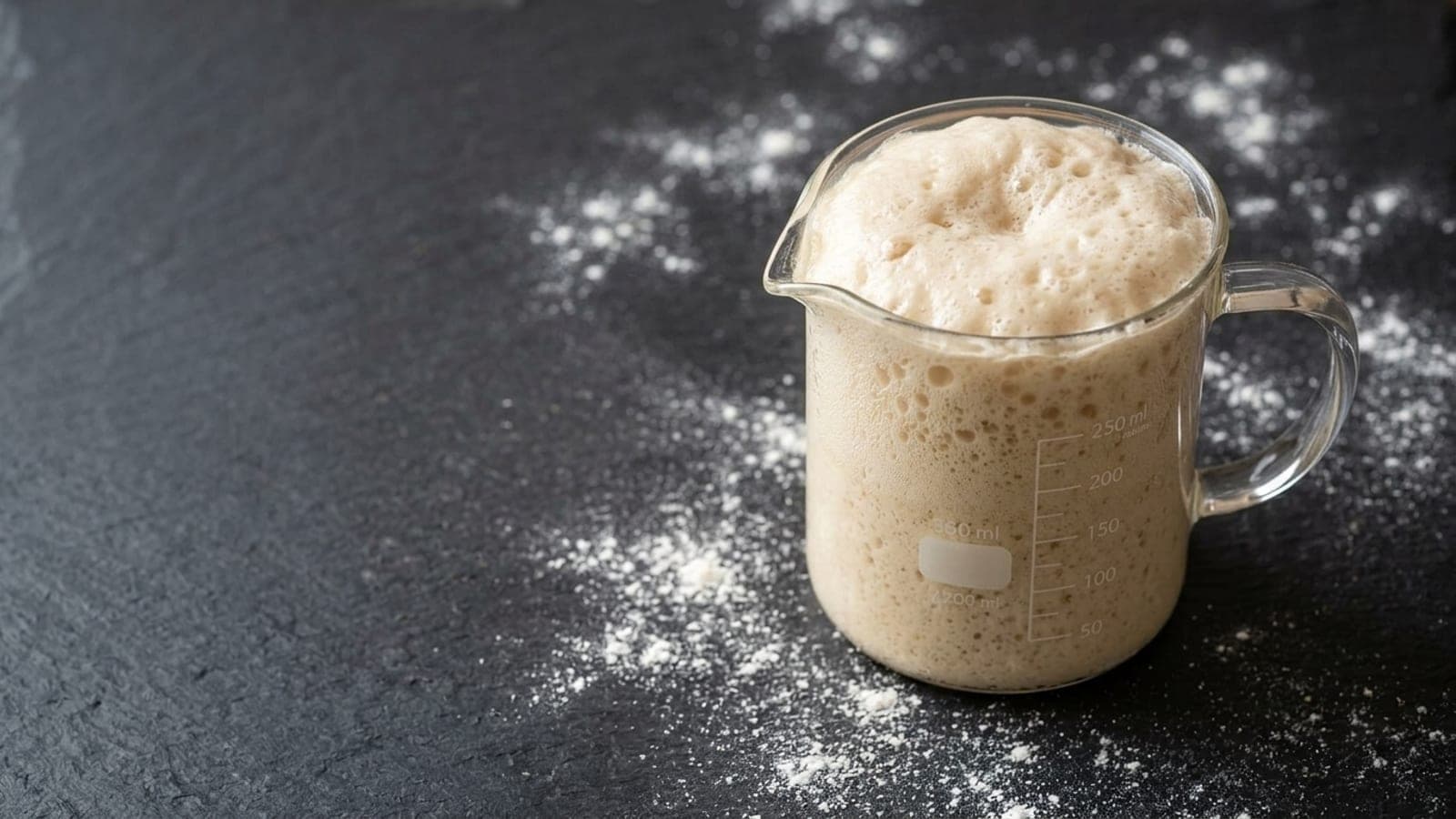
Yeast in pizza dough — the guide
Open any serious pizza recipe and the yeast line looks like a typo — half a gram for four pizzas? No typo. Yeast multiplies while the dough rests, so the real question is never just “how much yeast” — it’s “how much time, and how warm.”
This guide explains the numbers Impasto works out for you: the four kinds of yeast and how to swap between them, how time and temperature set the dose, why the fridge is your friend, and what poolish and biga are for. The motto throughout: time does the work, not the yeast.
The four yeasts
Instant dry (IDY) — fine granules, no proofing needed: whisk it straight into the flour. The calculator’s default, and the easiest to find.
Active dry (ADY) — coarser granules in a dormant coat. Wake it in a little warm water for 5–10 minutes before mixing.
Fresh yeast — the soft, crumbly block from the refrigerated aisle. Smells like a bakery, works beautifully, lives maybe two weeks.
Sourdough starter — not a product but a pet: wild yeasts and bacteria you keep fed. Brings acidity and depth, and you need far more of it by weight.
Swapping types? These weights raise the same dough:
| Yeast | Same rise |
|---|---|
| Instant dry (IDY) | 1 g |
| Active dry (ADY) | 1.2 g |
| Fresh | 3 g |
On a spoon: dry yeast runs about 3.1 g per level teaspoon, sourdough starter about 15 g per tablespoon — the same conversions the calculator’s “cups” mode uses.
How much? Time × temperature
Yeast activity roughly doubles every 7 °C. An hour at 27 °C ferments about as much as two at 20 °C; an hour in a 4 °C fridge counts for about 12 minutes. Impasto converts your whole plan into these “effective hours,” then sets the dose inversely: fresh yeast % ≈ 6 ÷ effective hours.
The anchor worth memorizing: a 24-hour rise at 20 °C wants about 0.25% fresh yeast of the flour weight — a true pinch. Halve the time, double the pinch.
| The plan | Fresh | IDY | IDY / 500 g flour |
|---|---|---|---|
| 4 h @ 24 °C | 1.0% | 0.34% | 1.7 g |
| 8 h @ 21 °C | 0.68% | 0.23% | 1.1 g |
| 24 h @ 20 °C | 0.25% | 0.08% | 0.4 g |
| 48 h @ 18 °C | 0.15% | 0.05% | 0.3 g |
Notice the direction: more hours, less yeast — and more flavor. The long rows taste better, because fermentation builds what no bigger pinch ever could.
No time for the long rows? Working the short end on purpose — dough today, not in three days — is its own craft. The same-day guide runs it: the doses by the hours you have, and the warm-spot trick that buys speed.
The nap in the fridge
At fridge temperatures (2–8 °C) the yeast nearly stops: a full day at 4 °C counts as only about 4.9 effective hours. That’s the trick of cold fermentation — you park the dough where it barely rises, while enzymes keep quietly turning starch into sugar, flavor and better browning.
Stages simply add up. A short rise on the counter, then one to three nights in the fridge, is the classic plan — the calculator’s fridge toggle does exactly this arithmetic and writes the schedule around it.
Practical notes: ball the dough before the long nap so it’s ready to stretch, and give it 1–2 hours back at room temperature before shaping — cold dough fights back. Buonanotte.
Want the day-by-day — 24 vs 48 vs 72 hours, fridge temperatures, rescue plans? The cold fermentation guide goes deeper.
Weighing a pinch
Kitchen scales shrug at anything under a gram. Either get a 0.1 g pocket scale (cheap, sold for jewelry and espresso) or use spoons: the 24-hour plan above needs about 0.4 g of IDY for 500 g of flour — roughly ⅛ tsp.
And don’t agonize. A little over and the dough is ready a bit sooner; a little under and it’s a bit later. Watch the dough, not the clock: ready dough has roughly doubled, jiggles like a panna cotta, and smells sweet — not boozy. If it didn’t rise at all, that’s usually dead or under-dosed yeast.
Poolish & biga
A preferment is a head start: the night before, you ferment part of the flour with a crumb of the yeast, then mix it into the final dough. It buys aroma, extensibility and color for zero extra effort — just planning.
Poolish is the liquid one — equal weights of flour and water (100% hydration). It bubbles like a batter and makes dough silky and extensible. Biga is the stiff one — around 45% hydration, a shaggy crumble. It builds strength and a deeper, almost nutty perfume.
In the calculator’s Pro mode, the preferment takes 10–60% of the flour and about 40% of the yeast, and the schedule gains a “night before” step. No preferment with sourdough — the starter already is one.
Ratios, the tonight-and-tomorrow split, ripeness and the schedule: the poolish & biga guide works a full batch through it.
Questions from the counter
Can I swap yeast types 1:1?
No — they pack different punch per gram. To replace 1 g of instant, use about 1.2 g of active dry or 3 g of fresh. Or switch the type in the calculator and let it re-weigh everything.
Why did my dough race ahead in summer?
The 7 °C rule. A 28 °C kitchen ferments roughly twice as fast as a 21 °C one, so the same pinch peaks in half the time. Use less yeast, plan fewer hours, or send the dough to the fridge.
Is more yeast faster?
Faster, yes — better, no. A big dose rises in two hours and tastes like it: flat, bready, faintly of beer. Flavor is made by time, and time needs only a pinch.
Can I ferment longer than planned?
Yes — that’s the whole model. Add hours in the calculator and watch the dose shrink, down to a floor of 0.02% fresh. For anything past a day or two, let the fridge carry the extra time.
Does sourdough follow the same math?
Same shape, bigger numbers: starter replaces yeast at 2–40% of the flour weight — the 24-hour, 20 °C plan wants about 6.3% starter. The gentle acidity is a feature, not a bug. The sourdough guide runs the whole model.
Enough theory
The calculator does all of this arithmetic the moment you move a slider — yeast type, hours, kitchen temperature, fridge nap, even the poolish split.
The clock is a suggestion. The dough is the boss. In bocca al lupo!